The Tretyakov Gallery in Vladivostok and the Primorsky Stage of the Mariinsky Theatre are launching an autumn series of joint events – from conversations with chorus masters to lectures on Diaghilev’s Ballets Russes and the work of theatre designers
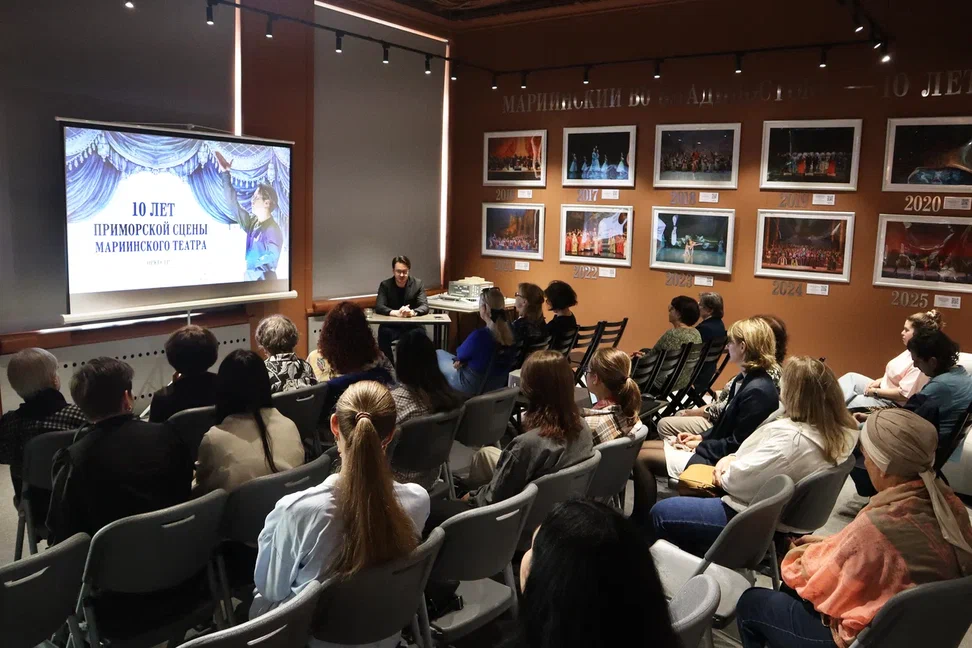
The Tretyakov Gallery in Vladivostok and the Primorsky Stage of the Mariinsky Theatre are continuing their joint programme, timed to coincide with two anniversaries at once: in 2026, the Tretyakov marks its 170th year, while the Primorsky Stage of the Mariinsky celebrates its 10th. This autumn, the collaborative project returns in a new format: audiences are invited not so much to observe the theatre from the outside as to look inside its workings — to meet the people and professions that usually remain behind the scenes.
The first event, held on 24 September, was a meeting with the chorus répétiteurs Elena Nikiforova and Ekaterina Rogozina. The Primorsky Stage chorus numbers around 80 singers and takes part not only in operas but also in vocal-symphonic programmes and certain ballet productions. Nikiforova and Rogozina have worked here since the theatre was founded; they spoke about how rehearsals for a large chorus are organised, how the repertoire is formed and what role the répétiteur plays in preparing a production.
In October, the series will be continued by members of the make-up workshop, and in November, during Arts Night, the public will be introduced to the work of the scenic artists – those who create backdrops, stage properties and the visual environment of a production. The programme will also include accounts of the first trials of props at rehearsals, the work of the répétiteurs and the finer points of scenography.
The project also has a museum strand. The Tretyakov Gallery will host a series of lectures at the theatre entitled “Theatrical Prelude”, devoted to artists who designed stage productions while continuing to work as painters. Particular emphasis is placed on Sergei Diaghilev’s legacy: the Tretyakov collection holds set and costume designs for Les Noces, Petrushka, the Polovtsian Dances and other celebrated productions. On 4 October, before the performances of Les Noces and Petrushka, audiences will hear about the original stagings of these ballets and about the artists of the Ballets Russes – Natalia Goncharova, Alexandre Benois, Nicholas Roerich and others.
This programme matters not only as a series of cultural encounters. The Tretyakov Gallery and the Mariinsky Theatre are gradually building a shared cultural environment in Vladivostok, even before the new museum complex on Eagle’s Nest Hill opens. The gallery has been working in the city since 2019, staging exhibitions and educational projects, while its Public Space serves as a temporary venue until permanent galleries appear. The Primorsky Stage of the Mariinsky Theatre, for its part, has developed one of the most substantial opera and ballet repertoires in the Far East over the past ten years.
In spring, the partners held the first part of the anniversary programme: they opened a photographic project marking the tenth anniversary of the Primorsky Stage, displayed original costumes from Macbeth and Romeo and Juliet, and arranged meetings with a conductor, a theatre photographer and the head of the wardrobe department. The autumn cycle follows the same logic – presenting the theatre not only through its performances, but through its people, crafts and the visual language that remains invisible from the auditorium.
And so, in Vladivostok, a format rare for Russia is gradually taking shape: the museum and the theatre operate not in parallel but as a single cultural system, where scenography sits alongside painting, theatrical costume beside the museum archive, and a conversation about Diaghilev becomes part of the contemporary city programme.
Watch Russia now has a fully fledged Arabic version of its website. Arabic joins Russian and English, offering another perspective on contemporary Russia and another opportunity for a direct conversation with the world
Serviced apartments are growing at a record pace, having already risen by 53% since the beginning of 2026

