A major exhibition drawn from the Tretyakov Gallery collection opens on 8 October at the National Museum of Arts in Almaty
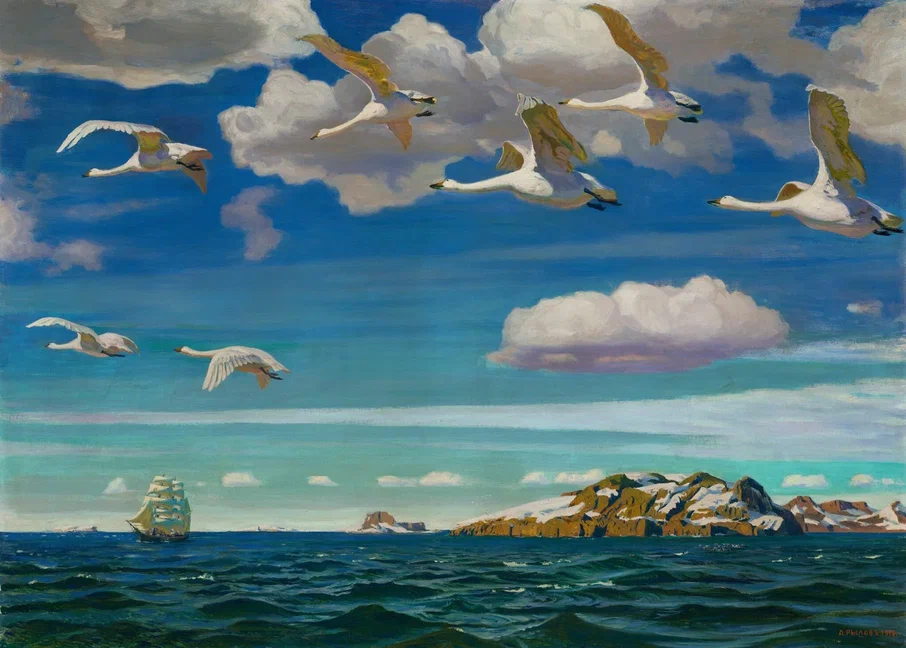
The relationship between the two largest art museums in Russia and Kazakhstan – the State Tretyakov Gallery and the Abylkhan Kasteyev National Museum of Arts of the Republic of Kazakhstan – has today reached a new level, developing through the realisation of joint exhibition and cultural projects. Following a successful display of masterpieces of Kazakh art in Moscow in 2025, the Tretyakov Gallery is presenting an exhibition in Almaty that introduces the wider public to the history of Russian art of the 20th century. This major exhibition project, realised with the support of the Rosatom State Corporation and the Kazakh Samruk-Kazyna fund, brings together the names of the greatest masters of Russian painting from 1917 to the 1970s. The canvases of several generations of artists reflect the sweeping changes experienced by Russian artistic culture during this period. Today these works can be regarded as the legacy of an era. Among the key pieces are In the Blue Expanse by Arkady Rylov (1918), The Bolshevik by Boris Kustodiev (1920), the study for Death of a Commissar by Kuzma Petrov-Vodkin, as well as works by Alexander Deineka, Pyotr Konchalovsky, Ilya Mashkov and other masters.
“We are confident that the exhibition will become an important event in the cultural calendar of our countries and will arouse keen interest among art lovers, reminding us how much unites us – in history, in culture and in the desire to see and convey the beauty of the world,” noted Olga Galaktionova, Director General of the State Tretyakov Gallery.
“Art is an important link in the dialogue between countries. The works on display help us to gain a deeper understanding of the shared pages of Russian and Kazakh history and culture. At present, we are working together to build the first nuclear power plant in the history of modern Kazakhstan. It will open a new chapter in our long-term cooperation, as the life cycle of such a project spans up to 100 years,” said Alexey Likhachev, Director General of the Rosatom State Atomic Energy Corporation.
“As a national wealth fund, Samruk-Kazyna consistently supports initiatives that matter for the development of society and the country. The exhibition of works from the State Tretyakov Gallery at the A. Kasteyev National Museum of Arts is a significant event in Kazakhstan’s cultural life. It is important for us to be the general partner of a project on this scale, one that strengthens cultural ties, broadens opportunities to engage with world art and contributes to the development of Kazakhstan’s contemporary cultural landscape,” noted Nurlan Zhakupov, Chairman of the Management Board of Samruk-Kazyna JSC.
“The largest international exhibition of the year introduces outstanding works of Russian art, allowing us to gain a deeper understanding of the artistic and historical heritage of the era. It is important to us that museum collections serve not only as custodians of cultural patrimony but also as a space for professional and cultural exchange that strengthens the ties between Kazakhstan and Russia,” emphasised Gulaim Zhumabekova, Director of the A. Kasteyev State Museum of Arts of the Republic of Kazakhstan.
The exhibition runs until 17 January 2027.
Russians Travel to China Three Times More Often Than Chinese Citizens Visit Russia – How Can This Imbalance Be Reduced?
The Amber Museum in Kaliningrad is hosting an exhibition of historical tableware and decorative items made from the sunstone.
In Ulan-Ude, Bato-Munko Chimitov, the only professional bone carver in the Republic of Buryatia, showcases his works alongside his students, to whom he is gradually passing on the craft in which he has been almost the sole practitioner for nearly half a century.
