The Eastern Vector is the current paradigm of Russian politics. It offers an opportunity for active development in Siberia and the Far East. These regions have rarely received Western investment, which mainly settled in the European part of the country, but they have always been attractive to Chinese businesses. Today, China is the main source of foreign investment in the Far Eastern Federal District.
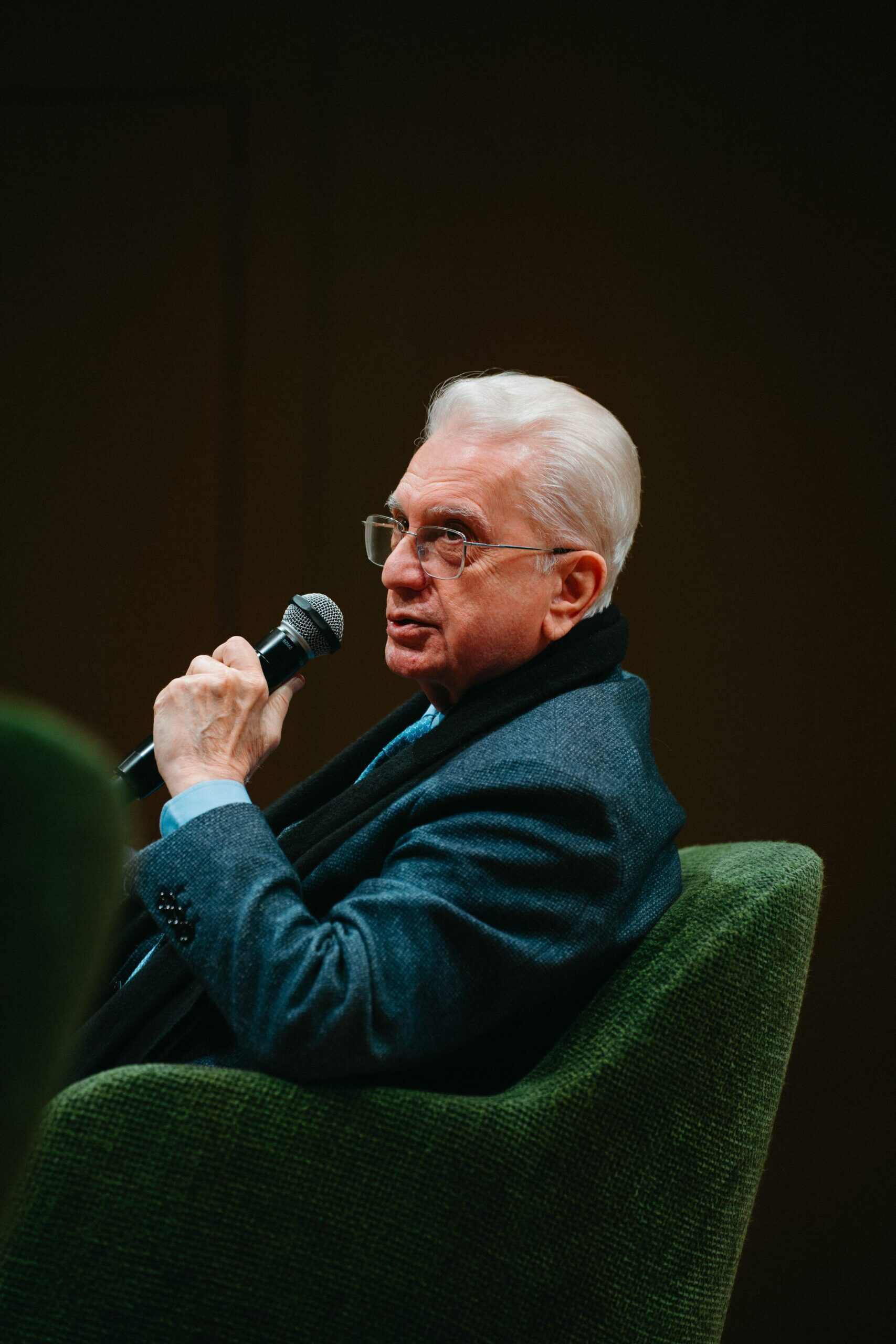
Sergey Sanakoev, Deputy Chairman and Chairman of the Commission on Facilitating Trade-Economic Co-operation and Entrepreneurship of the Russian-Chinese Friendship Society, President of the Centre for ASEAN Studies, and member of the Russian International Affairs Council, speaks with Watch Russia about what is most important in doing business with Chinese partners.

Since 1996, you have consistently been part of Russian delegations at meetings between heads of state and governments of Russia and China, and participated in drafting the Treaty of Good-Neighborliness and Friendly Cooperation Between the People’s Republic of China and the Russian Federation signed in 2001. May we, therefore, call you one of the builders of the current system of relations between the two countries?
I would rather describe myself as a participant in the process and a team member who made a decisive contribution to what we now have. Perhaps it sounds immodest but I am very proud of the congratulatory telegram from Yevgeny Primakov, then President of the Chamber of Commerce and Industry, sent in 2008 on the tenth anniversary of the Russian-Chinese Centre for Trade and Economic Cooperation, noting my significant contribution to the development of Russian-Chinese relations. Unfortunately, Yevgeny Primakov is no longer with us. Nowadays, I personally focus primarily on public work within the scope of the Russian-Chinese Friendship Society. This Society has existed for 68 years and is the successor to a similar Soviet organization. Since its formation, not only have we not lost relationships of trust with the Chinese side, we have even strengthened them. At this year’s annual forum Russia and China: Cooperation in a New Era, held since August 2022 in the Huamin Park Chinese Business Centre in Moscow, we emphasized that our friendship is more valuable than any amount of money in the world. We are confident that the key factor is human collaboration: relations between people, friendships, mutual visits, exchange of experience, projects in education, tourism, and science. All these play a tremendous role in building economic partnerships. And it is precisely our Society that prepares the groundwork for such partnerships by fostering human connections and friendship. By actively participating in its activities, I have served Russian-Chinese relations for many years and will continue to do so.

It is interesting that, despite the long history of the Russian-Chinese Friendship Society, and all its initiatives and projects, we often hear today that we are not particularly prepared for dialogue with Chinese partners because we do not understand their negotiating traditions or business etiquette. How do you assess the level of mutual understanding between Russian and Chinese businesses?
The Society’s core activity is to establish correct communication models and create trust mechanisms. As far as cultural differences between Russians and Chinese are concerned, we must account of the negative influence exerted by Western business values. Starting in the 1990s, we firmly embraced Western principles like “nothing personal, just business”, “time is business”, “time is money”. Speaking to the Chinese in such terms is indeed difficult. For the Chinese, in addition to profit, there is also the importance of trust in business cooperation. They expect honesty from their partners. The Chinese are excellent psychologists. Like children, they can sense your emotional state during negotiations by reading intonations, gestures, reactions, facial expressions. If you’re open and sincere, you’ll receive respect and loyalty from them. But, if someone says one thing while thinking another, the Chinese will likely notice and respond accordingly. In general, they always seek balance and compromise. It’s part of Chinese culture. And they’re skilled at saving face, finding solutions without breaking relationships. Perhaps that’s one of the main lessons we could learn from them.

Russian-Chinese relations are experiencing their best period in history. Even so, against the backdrop of unprecedented political partnership, we still don’t see any increase in Chinese investment in the Russian economy. Some analysts argue that the current relationship between the two countries is superficial. Do you agree?
No, I disagree. Superficiality lies more in analysis than in actual relations. I’ve heard such assessments for over a quarter-century but they don’t reflect reality. Current Russian-Chinese relations aren’t some kind of temporary pivot to the East, as is sometimes claimed; nor are they a product of fleeting circumstances or political manoeuvres. Instead, they result from a deliberate 30-year journey toward each other. What unites our countries is a shared vision of the world. Both Russia and China advocate a multipolar world free from domination by a single power.
When it comes to economics, the facts speak for themselves. In the mid-1990s, trade turnover between Russia and China stood below USD 5 billion. Today, it has exceeded USD 250 billion. This isn’t, of course, comparable yet to the USD 600–700 billion levels seen between China and the US or even Japan, but growth continues. We’re expanding cooperation despite the sanctions pressure and global instability. Volumes are increasing not only in the raw materials sectors, as commonly highlighted, but also in exports of consumer goods, food products, etc.
As for investment, how should they be defined? The Chinese invest differently. They’re willing to build major infrastructure they don’t own, such as power plants. They provide funding, construct facilities, manage them until they’ve recouped their costs, then transfer ownership back to customers. In the West, this would be called investment. Here, however, it’s regarded as credit.
Yet there’s another internal reason: we haven’t created a system in our country that comfortably accepts foreign investment. More importantly, we’re afraid of them, perceiving them as intrusions into our property. One high-ranking Chinese official once told me, “Mr. Sanakoev, we won’t invest where we’re seen as a threat. We don’t want to threaten anyone. You’re our friends.” Back in 2006, at the invitation of Yevgeny Primakov, the head of the Wanda Corporation came to Russia looking for projects worth investing at least USD 3 billion. He travelled across the country by train to Vladivostok, stopping in cities along his route and meeting governors. Afterward, he abandoned the idea of investing here because he didn’t feel wanted. So perhaps something needs fixing before the Chinese are blamed for not investing.

To boost this activity in Moscow, the Huamin Park Chinese Business Centre was built. It became a major investment project itself, with total Chinese contributions exceeding USD 700 million. You were involved in initiating this project.
In fact, I was the author of the idea, first voicing it in 2001 at a meeting of Russian entrepreneurs with Zhu Rongji, Premier of the State Council of China. I founded and served as the first General Director of the Park Huamin company, later transferring it to the Chinese side, a specially established project company named Huamin whose main shareholder is the China National Petroleum Corporation (CNPC).
It took a long time to build this centre in Moscow. Today, Huamin Park includes both a business centre and a congress hall, as well as a five-star hotel where Xi Jinping stayed twice, and the largest Chinese landscape park outside China. It’s open daily to visitors absolutely free of charge. Please come and visit. Most importantly, though, Huamin Park serves as headquarters for Russian-Chinese collaboration: dozens of events are held there monthly, including our forum Russia and China: Cooperation in a New Era.
So is this a place of Chinese strength in Moscow?
No, I wouldn’t label it as such. Such characterizations are usually applied to traditional Chinatowns located in Western capitals. Huamin Park doesn’t fit into that category. It’s not a place where members of the Chinese diaspora live and conduct their affairs. Huamin Park is rather an international hub where Chinese businesses meet with Russian and other partners.

What areas beyond the resource sector might, in your opinion, become points of growth for deepening and broadening economic cooperation between Russia and China?
First, construction. China possesses unique infrastructure project competencies: bridges, tunnels, roads, industrial zones, energy production. These projects are implemented worldwide, and Russia could easily become a strategic direction for them. We need modernized infrastructure, and China has the requisite technologies, resources, and management expertise. In the middle of the twentieth century, the USSR constructed 156 industrial facilities in China, forming the foundation of the country’s economic miracle. Now, history might develop in reverse: the Chinese are ready to help Russia implement large-scale projects. This isn’t about dependence but mutual benefit.
Second, advanced technology, especially AI and software development. China has made enormous strides in this area. Meanwhile, we have engineering talent and scientific schools. Naturally, technological collaboration requires caution, no one wants to reveal secrets. An effective model here might involve joint enterprises with equal 50/50 Russian and Chinese participation. This would guarantee equal commitment and protection of common results. As mentioned earlier, the Chinese value honest and equitable partnerships, and for conducting business with them, it’s crucial to establish systems of trust and openness. Finally, I’d highlight a specific cooperative programme between our countries: developing the Northern Sea Route (NSR). This transport artery, originally created in Soviet times, has become a vital transport corridor for efficient delivery of goods between the western and eastern parts of our continent. Unsurprisingly, this route is central to China’s Belt and Road Initiative. Thanks to professional project management by Rosatom Corporation, freight volume transported via NSR has already set records, surpassing 40 million tonnes a year and continuing to grow. But cooperation with China could extend beyond cargo transportation. First, we’ll attract high-tech Chinese companies to modernize over 20 Russian ports along the NSR route. Recently, I visited Qingdao’s fully automated port. Imagine operations running non-stop day and night, without the need for illumination. That’s exactly what’s needed in the harsh conditions of our Far North. Additionally, we discussed the prospects for Shandong province’s ports becoming bases for the NSR. Furthermore, telecommunications and navigation systems are critical for further development of the project. To ensure stable connectivity for the NSR, corresponding satellite constellations should be deployed. And, as I’ve pointed out, we’ve got great cooperation going with China in this field too.