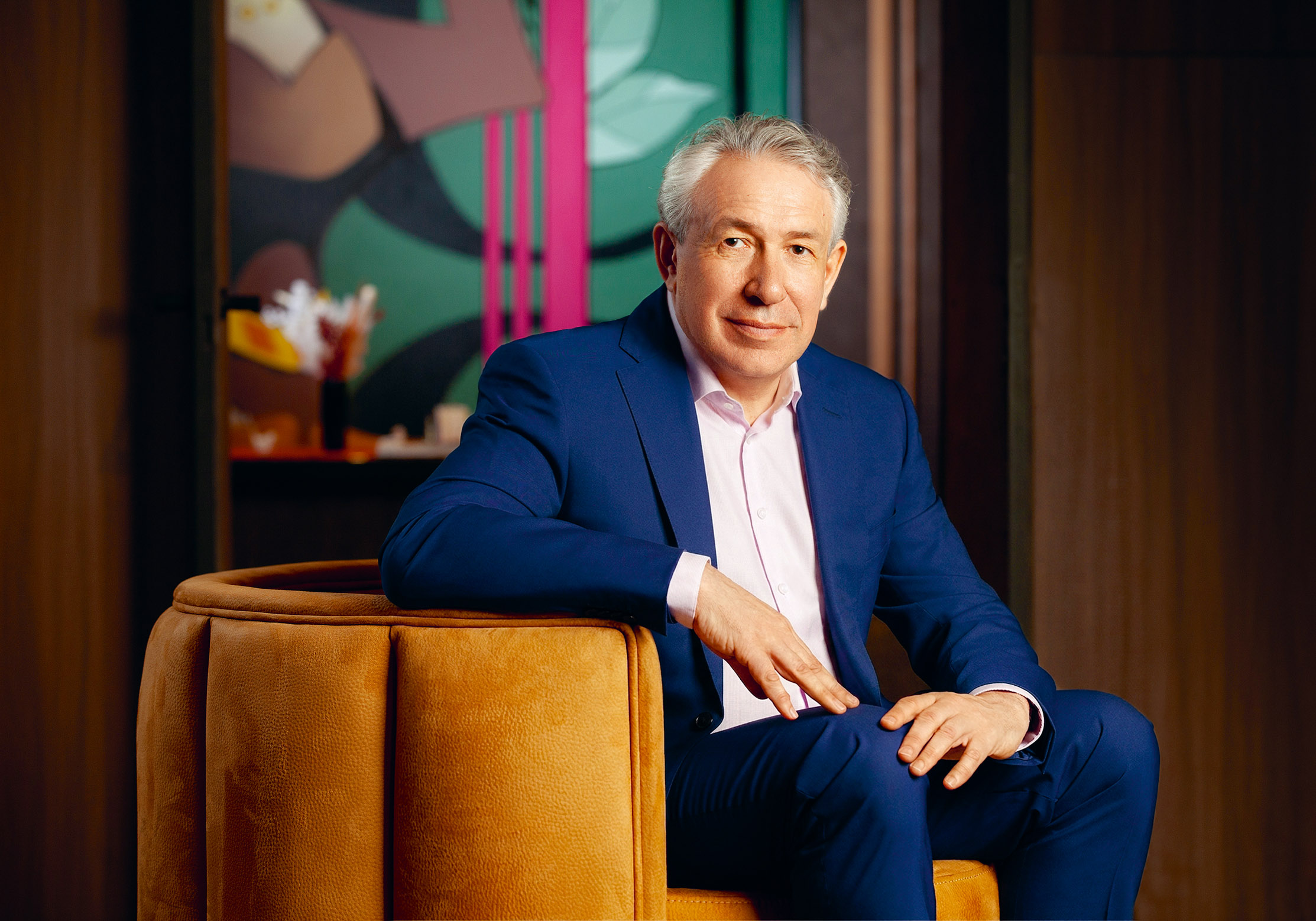
Vyacheslav Eliseev, Arabist and cross-cultural communication specialist, head of Job for Arabists Business Solutions, on a new stage in the Russian-Arab dialogue.
A visa-free regime between Russia and the Kingdom of Saudi Arabia (KSA) will be introduced this summer; the matter is settled and no longer open to discussion. The principal argument in favour of this latest step towards one another has been the growth in tourist flows. In reality, however, the significance of such a decision extends far beyond tourism. Visa-free travel between Russia and certain Arab countries, chiefly those of the Persian Gulf region — or the Arabian Gulf, as the Arabs themselves call it — is less a matter of simplifying journeys than of building a new infrastructure of business trust and cross-cultural dialogue. This is precisely the point that Russian-Saudi, Russian-Emirati and Russian-Qatari relations have now reached.
On the surface, the mutual abolition of visas always appears to be a technical diplomatic decision. In practice, it removes one of the principal barriers to international cooperation — the difficulty of establishing that first face-to-face contact. For the Gulf states, a personal meeting remains a cornerstone of business culture. Decisions about partnerships are rarely taken remotely; they take shape through a series of visits, negotiations and discussions held in person. It is precisely at this level that the first pilot agreements usually emerge. Simplifying travel therefore has a direct bearing on how quickly joint projects get off the ground. That said, it is essential to understand that visa-free travel does not create the conditions for cooperation from scratch. It arrives at a moment when mutual interest between the parties is already growing, and it makes a great deal easier.
Allow me to offer a few examples, taking Saudi Arabia as the principal headline act of bilateral dialogue in 2025–2026. According to publicly available statistics, in the first nine or ten months of 2025 alone, trade between Russia and Saudi Arabia grew by approximately 85% compared with the previous year. Such growth would have been impossible without the expansion of sectoral cooperation at every level. Moreover, the nature of that cooperation is changing. Where energy, collaboration within OPEC+ and oil production once formed the foundation of the relationship, today compelling Russian-Saudi partnerships are developing actively in industry, logistics, infrastructure, education, AI, technology, art, culture and the service sectors.
A telling example was Innoprom, the major international industrial exhibition in Yekaterinburg, where, I would remind you, the United Arab Emirates served as partner country in 2024, while Saudi Arabia took on that role in July 2025. This marked the first time the Kingdom had maintained such a substantial presence at Russia’s leading industrial platform. It was in Yekaterinburg that the holding of Innoprom 2026 in Riyadh in February was announced. A reciprocal gesture came in the form of an invitation for Saudi Arabia to attend the St Petersburg International Economic Forum 2026 as guest country.
Two weeks before the opening of Innoprom 2025, at the invitation of the Ministry of Foreign Economic Relations of the Sverdlovsk Region, our company’s experts held an in-person preparatory workshop and practical seminar for Russian export and manufacturing companies in Yekaterinburg. Its principal aim was to brief Ural industrialists, entrepreneurs and business owners on the specifics of entering the Saudi market and to prepare enterprises for direct dialogue with the Kingdom’s delegation on the sidelines of the exhibition. Furthermore, in the autumn of 2025 we were invited to take part as speakers in a webinar organised by the Tourism Development Directorate of Mostourism, entitled “Market Track: Saudi Arabia”, where we examined in detail the demand for travel products among Arabian travellers and businesspeople, answered questions from the hospitality industry representatives and hoteliers attending the session, and proposed a series of constructive solutions for preparing the capital to receive Arab guests — ranging from VIPCar meet-and-greet services, in which a comfort- or premium-class vehicle is provided not only with a driver but also with a personal interpreter assigned to the guests who speaks not merely Arabic but the appropriate dialect, to the training of certified Arabic-speaking guides, the production of specialist guidebooks to help guests navigate the capital more comfortably, and other initiatives. Incidentally, the project to produce a guidebook for tourists from Saudi Arabia and other Arab countries was successfully delivered by us in partnership with the Department of Oriental Studies at the Faculty of International Relations of Ural Federal University (UrFU) in Yekaterinburg, serving as an excellent practical outcome of Innoprom 2025.
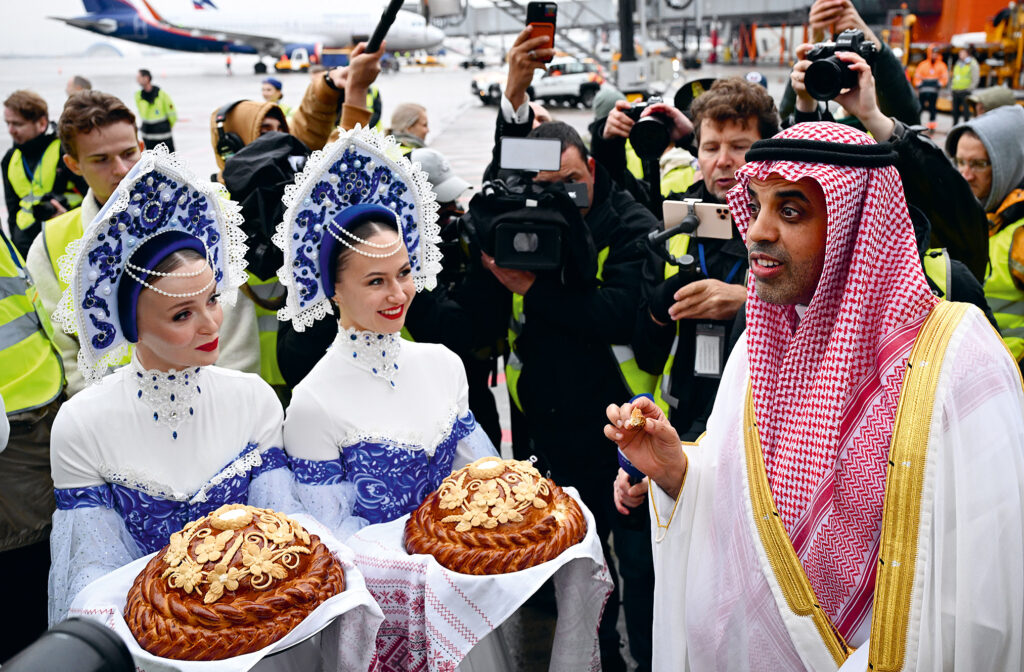
Held from 8 to 10 February in the Saudi Arabian capital, Innoprom 2026 demonstrated growing mutual interest across a range of industries. The total number of Russian companies exceeded 270, while more than 650 companies and organisations took part on the Saudi side. A series of significant agreements were signed during Innoprom 2026 — for example, on cooperation between the investment and venture fund of the Republic of Tatarstan and Tadaamun Investment L.L.C., and between the Saudi industrial and investment holding company Alfaddaghi Holding and a number of leading technology firms from Moscow. Such steps show that cooperation between the two countries has already moved beyond declarations into practice. This means that the Kingdom of Saudi Arabia is now being incorporated into the long-term architecture of Russia’s foreign economic agenda, which already includes the United Arab Emirates, Qatar, Oman, Iraq, Syria and other Middle Eastern countries, each engaged to varying degrees across different sectors.
Today we are witnessing a rise in tourist arrivals to Russia from Saudi Arabia, the UAE and Qatar. And, as noted above, in international practice and within the Middle Eastern context, this almost always heralds investment interest. A first visit forms a general impression of the country and its people. A second allows one to study the infrastructure and the fundamentals of communication more closely. Only the third becomes a fully fledged business trip, with negotiations and meetings arranged in advance.
Here is another example from our own practice: in February 2026, our Arabic translators supported a B2B meeting in Moscow between Saudi Dates, a date producer from Saudi Arabia, and potential Russian partners. And we know for certain that this meeting — and the high-quality networking that accompanied it — came about only after thorough preparation, several preliminary private visits to Moscow by the Saudis, and the interest they showed in our country’s market as a place to present their products. Incidentally, many Saudi companies already work with Russia through their branches in the UAE and neighbouring countries, and are now establishing a direct route as well.
Crucially, Saudi and other Arab business travellers are already actively visiting not only the capital but also regional centres and Russian cities with populations of over a million, which have traditionally served as platforms for industrial and private-sector cooperation. The example of Yekaterinburg demonstrates that Russia’s major industrial hubs, such as the Urals, are becoming independent points of entry for cooperation with the Gulf states. Similar dynamic developments are under way in Tatarstan and Bashkortostan (Muslim constituent republics whose culture is intuitively familiar to Saudis), in St Petersburg (thanks to SPIEF), in Sochi (Russia’s sporting capital) and the Krasnodar Territory, as well as in other regions.
The common assumption that the principal outcome of growing tourist flows will be the development of the hospitality and service sectors is not entirely accurate. In the short term, the greatest benefits will accrue to companies operating in segments such as engineering, industrial exports, educational services, transport and logistics, IT solutions, consulting and the localisation of manufacturing. Add to this the UAE’s ambition to become the Middle East’s largest international financial and tourism hub, and Saudi Arabia’s aim to establish itself as a global centre for AI and gaming development, and much becomes clear.
For these industries, well-established business travel routes will significantly reduce the cost of entering the markets of the UAE and Saudi Arabia, as well as the increasingly popular Oman, Bahrain and Qatar, and enable faster negotiation cycles. This is particularly important for small and medium-sized enterprises — the segment that most often forms the foundation of practical cooperation while global agreements are reached and strategic contracts signed at the highest level.