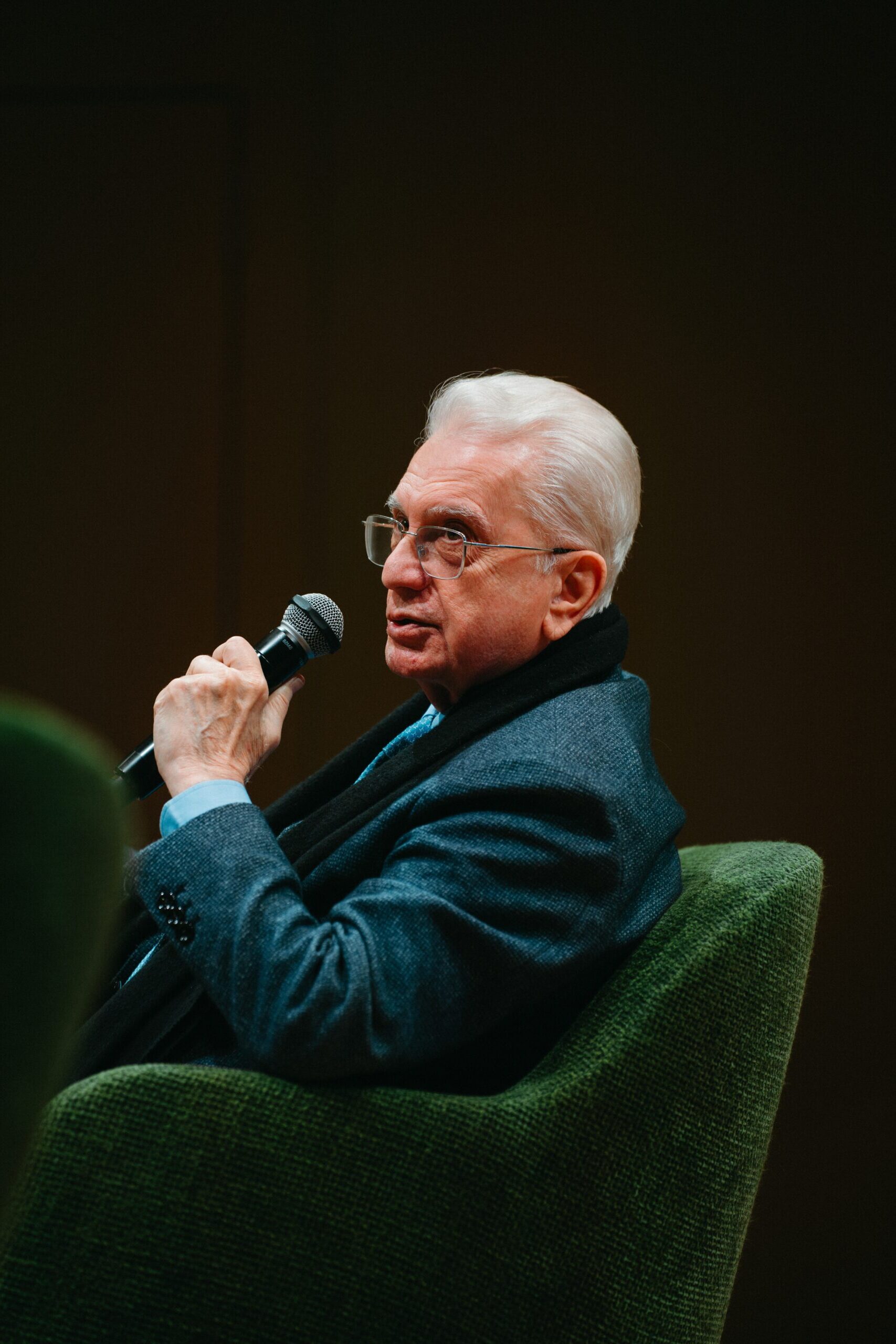
Sergey Gorkov, Chairman of the Russian-Arab Business Council of the Chamber of Commerce and Industry of the Russian Federation, on the affinity between Russian and Arab cultural codes, the Arabs’ love of snow, the Russian avant-garde and warmth of spirit, and a new era in relations between Russia and the Arab world.
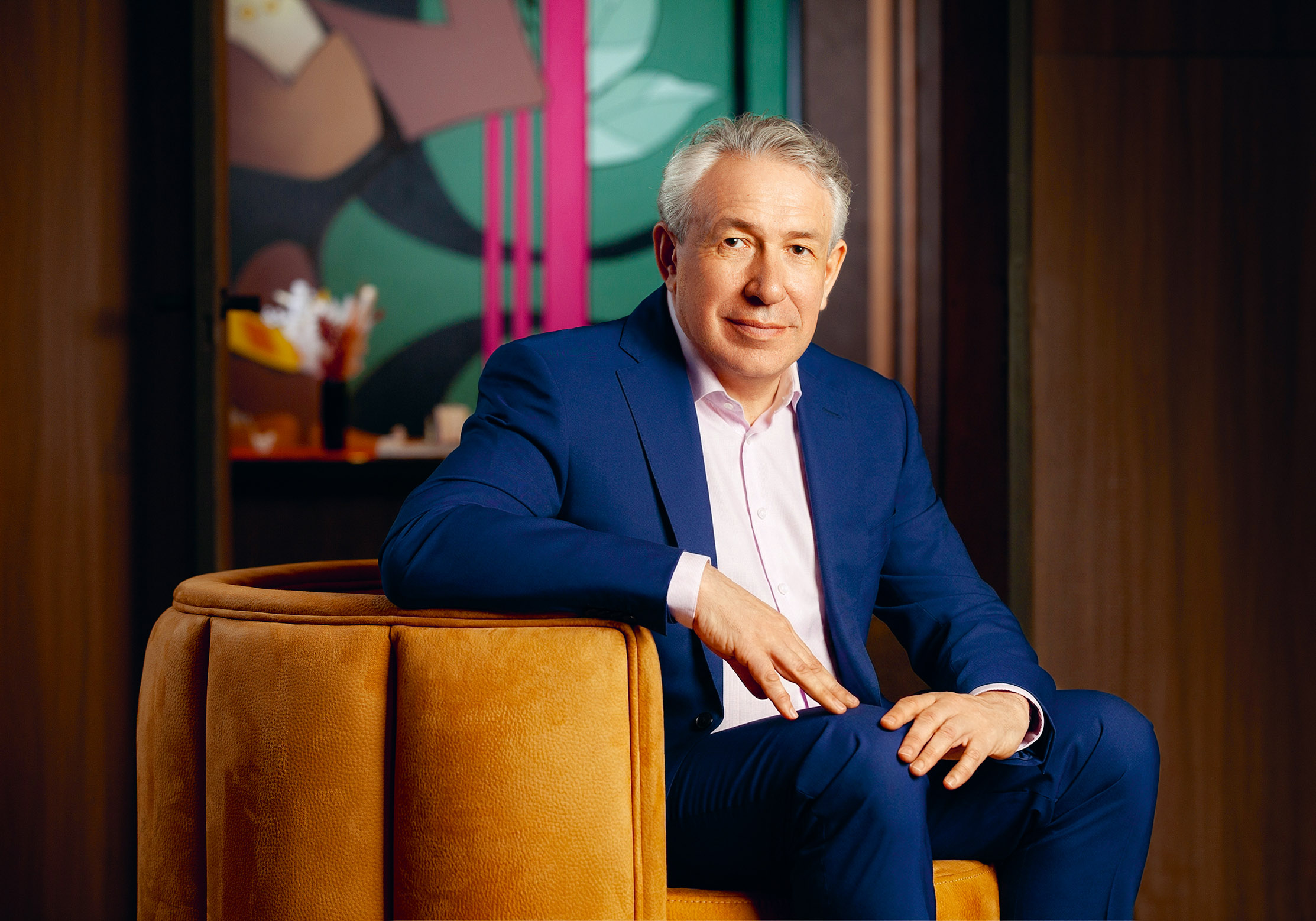
In 2025, a highly significant event took place for the domestic travel market: visitor numbers from the Persian Gulf states to Russia rose by 250%. Arab tourists are valuable guests in the most literal sense, as they are known not to skimp. At first glance, it might appear that the hospitality industry will be the primary beneficiary of this tourism boom. But that is not entirely the case. Leisure travel usually follows business travel, reflecting the dynamics of commercial cooperation. Russia and the Arab world have indeed evolved from situational partners into predictable, long-term players for one another.
We spoke with Sergey Gorkov about what unites us, where the foundations lie for building a new, multi-faceted architecture of partnership, and how hoteliers should conduct themselves to ensure that Arab guests return with their entire family clan and numerous friends.
How would you assess the trajectory of Russian-Arab engagement: is it closer to a point of accumulation, or has it already reached a qualitative turning point? And what unites Russia and the Arab world today — pragmatism, geopolitics, or a shared interest in long-term investment?
You know, I would say that we have already moved beyond the phase of simple accumulation and are in the midst of a profound qualitative shift. These are no longer one-off deals but a fully fledged institutional alliance. Look at the figures: by the end of 2024, trade turnover with the countries of the League of Arab States had reached $34 billion, while with key players such as the UAE and Saudi Arabia we are seeing explosive growth — up 60–80% in the past year alone. When the volume of joint trade and investment projects increases sixfold over a short period, and joint platforms handle billions of dollars, this is no longer a ‘partnership of convenience’; it is the foundation of a new economic reality.
What unites us? I wouldn’t single out any one thing. It is a complex cocktail in which economic pragmatism serves as the foundation and geopolitics as the framework. Russia and the Arab world share the same view of sovereignty: the right to determine our own destiny on the basis of national interests rather than foreign directives. Yet if one were to identify the principal driver, it is an investment interest in the future. Today Russia offers unique technological expertise — from nuclear energy and space to genetics and food security. The Arab world, for its part, acts not only as an investor but also as a major logistics and financial hub. We are building an architecture that does not depend on political circumstances. In my view, we have now reached the point at which the quantity of contacts is finally turning into quality. We are witnessing the formation of a new, multi-vector architecture.

The UAE has always appeared to be the focal point of Russian-Arab economic cooperation. Today, however, Saudi Arabia has arguably become the strategic investor and even the political anchor. How do you assess the current hierarchy of Russia’s Arab partners? How might it be redistributed in the near future?
I wouldn’t use the word “hierarchy”. It’s more a matter of identifying one’s own priorities and aligning them with the interests of our Arab partners, who are themselves very different. If the UAE is a shop window for trade and a financial and logistics hub, then Saudi Arabia is a large domestic market with an appetite for megaprojects and long-term investment.
Let us turn to the reality of 2025–2026. The Emirates firmly hold the lead in terms of volume: trade turnover with them in 2025 set a new historical record, surpassing the $12 billion mark. They are our ‘entry ticket’ to the Global South, through which an enormous flow of goods passes — from cars and machinery to foodstuffs. But you are right about Saudi Arabia. Here we are seeing a move into a different weight class. Whereas in 2024 trade turnover stood at around $3.8 billion, the current momentum is simply phenomenal: growth in the first quarter of 2025 was fourfold! Riyadh today is a political heavyweight, alongside which we keep our finger on the pulse of the global energy market through OPEC+. Their readiness to become the guest country at SPIEF 2026 also speaks volumes.
How will the roles be distributed in the near future? Saudi Arabia will continue to transform into an anchor for long-term industrial projects. We will see more joint ventures in chemicals, metallurgy and nuclear energy. This is a partnership built for the long haul. The UAE will remain the key operational hub. The signing of the agreement on trade in services and investment in August 2025 has only cemented its status as the principal settlement and service centre.
However, I would advise export-oriented businesses not to limit themselves to these two countries. I recommend taking a closer look at Egypt, Algeria, Oman and others. Oman is demonstrating exponential growth in trade, becoming an important new link in supply chains, while Algeria retains its status as a key partner in the gas sector and high technology. Egypt’s vast market and growing population also make it highly attractive for both exports and imports. When building a bridge between Russia and the Arab world, there is no ‘first’ or ‘second’. There is a unique synergy: some offer speed and flexibility, others scale and stability.

Which sectors are set to become the key drivers of cooperation (energy, logistics, finance, technology)? Are there any industries whose potential remains underestimated?
You know, we are accustomed to viewing the Arab world through the prism of oil, but that is yesterday’s story. Today we are building an economy for a post-carbon future. As for technology, these are no longer merely plans. Russia is actively exporting its cybersecurity and smart city solutions to the region. Our IT giants are relocating their headquarters to Dubai and Abu Dhabi not for tax reasons, but for access to new markets. Yet the real breakthrough, as I see it, lies in nuclear energy and hydrogen technologies. This is what will make our partnership enduring: we provide the technology, they provide the platform and the capital.
You asked about undervalued niches. In my view, there are two fundamental areas: food security and high-tech medicine. Take agrotech (AgroTech), for example: we are ceasing to be merely a ‘breadbasket’. What is at stake is the creation of joint breeding centres and irrigation systems. The Arab countries are extremely keen for Russia to become the guarantor of their physical survival in terms of food, and they are ready to invest billions in our agricultural technologies.
Pharmaceuticals and biotech are a vast sleeping giant. After the pandemic, it became clear that having one’s own drug manufacturing base is a matter of sovereignty. The joint development of vaccines and next-generation medicines is something capable of generating revenue comparable to raw material sales.

And then, of course, there are the creative industries. You may be surprised to learn that Russian content — from animation to game development — is in enormous demand in Saudi Arabia and the UAE. We speak different languages, but our cultural codes when it comes to family values and respect for tradition are remarkably close. This is the ‘soft driver’ that we are only just beginning to appreciate.
What are the main barriers holding back the development and deepening of relations today — infrastructure, regulatory or mental? And how tangible is your Council’s role in lowering them?
It is always a combination of factors. But if we were to set priorities, uncertainty comes first. We all understand that business requires speed. When a transaction or a container might not go through, that means extra costs. We are currently working intensively on platform solutions that will allow companies to address the challenges they face with greater flexibility — namely, a system of trade and logistics hubs and a framework for accessing local financing. We also plan to launch a B2B deal-making platform to connect partners via smart contracts.
As for mental barriers, Russian business still lacks patience. In the East you cannot simply arrive, sign a contract and fly home. Here you must “drink many cups of tea” before anyone entrusts you with a serious project. And this is precisely where our Business Council comes into play. We work as a kind of “translators” — not from one language to another, but from one set of meanings to another.
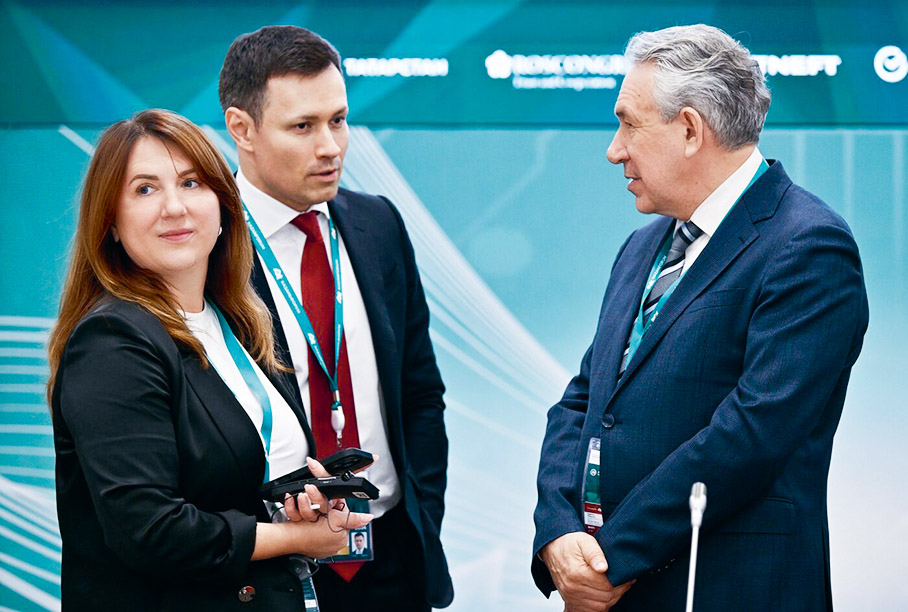
We remove uncertainty: we help companies verify their partners so that behind an impressive signboard in Dubai or Riyadh they see a genuine business rather than intermediaries. We help establish direct dialogue with regulators: we collate the requests businesses make of state regulators and raise them to the level of intergovernmental commissions. We create ecosystems: we organise those very “cups of tea” on an industrial scale, shaping an environment in which a Russian engineer and an Arab investor feel at ease discussing a joint project. The Russian-Arab Business Council of the Chamber of Commerce and Industry of the Russian Federation is a kind of icebreaker, launched back in 2003 by Yevgeny Primakov. We break the ice of mistrust so that the trade caravans can follow safely in our wake.
When discussing Russian-Chinese cooperation, many businessmen and experts complain of a failure to understand the business philosophy and corporate culture of their partners from the PRC. Is the mental gap with the Arab countries also a major problem? How prepared is Russian business for dealing with the East?
You know, that is a very accurate observation, but there is a fundamental difference here. With China we often come up against a “great wall” of meaning: business there is a strategy in the spirit of Go (the ancient strategic board game of Go appeared in China more than 2,500 years ago. Its strategy is based not on a set of rigid moves, but on a way of thinking about the long game. — Ed. note, WR), where what matters is not only profit, but also elaborate ceremony and long-term planning. With the Arab world it is quite different. I would say that mentally we are far closer to the Arabs than might appear at first glance. At the heart of both our business culture and theirs lie personal trust and the concept of honour. If a Chinese person believes in the contract and the hierarchy, an Arab believes in the individual. In Russia, too, business has always been built “on a handshake”. We understand this concept: first we become friends, and only then partners. But is our business ready? To be honest, for now it is 50-50.
The main mistake Russian entrepreneurs make is excessive haste. We are accustomed to the rhythm of “a deal in a week”. In the East, however, time has a different density. Any attempt to force matters here is perceived as disrespect or a sign of desperation. You may arrive with a brilliant IT product, but if you are not prepared to spend two days talking about family, history and falcons, there will be no contract.

The second problem is underestimating status. In Arab culture, who conducts the negotiations matters enormously. If a family member represents the Arab fund while our side sends a middle manager, the dialogue will end before it has even begun. Yet I can see the situation changing. A new generation of Russian executives has emerged — orientalists in the best sense of the word. They study the language, they understand the nuances of Islamic finance and, most importantly, they have learnt to listen. Russian business is currently taking an accelerated course in cultural diplomacy. We realise that the East is not merely a sales market; it is a space where reputation is built over decades and lost with a single ill-judged gesture. Those who have grasped this are already opening doors that remained locked to Western companies for years.
What mistakes do companies most often make when entering Arab markets? Do you help businesses correct them, or avoid them altogether?
The most fatal mistake is trying to impose your own rules on someone else’s turf. Many of our companies assume that if a product is successful in Moscow or Europe, it will be snapped up in Riyadh. If you dissect the typical failures, I would single out three.
The first is remote management. Attempting to run a business through flying visits or Zoom. In the Arab world, personal presence matters. If you are not on the ground, you do not exist in the business landscape. The second is ignoring localisation. This is not about translating a label into Arabic. It is about a deep understanding of meaning. For example, you might launch a flawless IT service but fail to account for local payment habits or religious holidays — and that is it, the project goes down the drain. The third is expecting quick money. The Arab market is a marathon. Companies often burn out within six months because they failed to allow time for things to bed in.
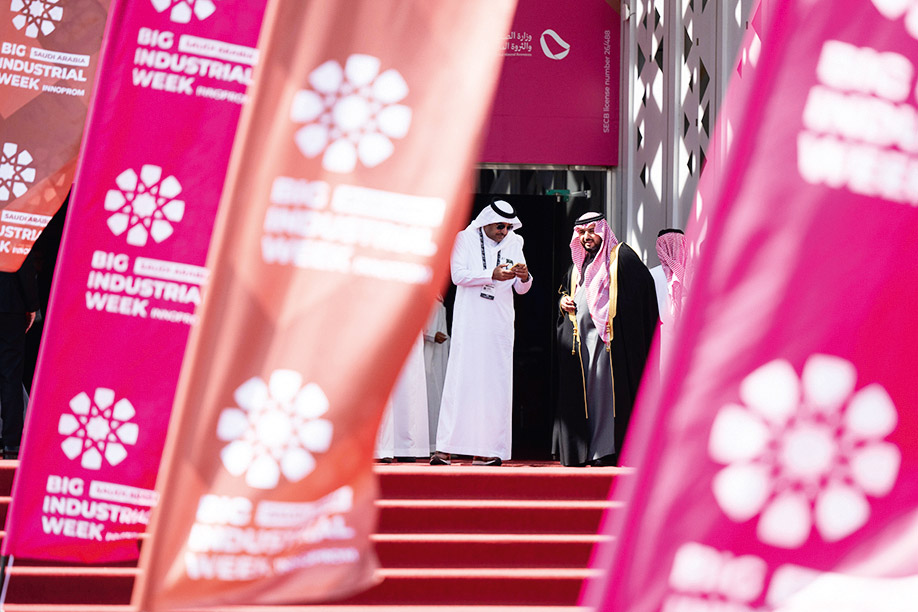
Do we help? That is our primary mission. But we are not simply consultants; we establish an early-warning system and operate on two levels. The first is the ‘intellectual filter’. We tell an entrepreneur frankly: ‘Your product, as it stands, will not sell here; you need to change the packaging or the business model.’ That saves people millions of dollars before they have even begun. The second level is the social lift. We usher a company into the right offices and introduce it to trusted local partners. In the East, a partner is your guarantor before the market. Finding the right sponsor or co-investor accounts for 80% of success. We help companies avoid toxic connections that could shut a region to them forever. Essentially, we act as a business navigator: we know where the reefs lie and where the water is deep. The helm, however, naturally remains in the hands of the business itself.
What is it that you personally love and value about the Arab business world, and Arab culture in general?
You know, behind this façade of futuristic skyscrapers and digital ministries lies something profoundly human and fundamental. If I had to choose a single word, it would be fidelity — to one’s values and priorities. I genuinely admire how the Arab world manages to strike that balance. They live in the 22nd century, adopting blockchain and building cities of the future, yet their core values — respect for elders, devotion to family and to their country — remain unshakeable. In our fast-paced and at times cynical world, such loyalty to one’s roots commands deep respect.
From a business perspective, I am drawn to their hospitality as a strategy. In Arab culture, a guest is a sacred figure. And when this carries over into business, negotiations cease to be a battle over percentages and become a process of building relationships. This aesthetic appeals to me: the courtesy, the attention to detail, the ability to read between the lines. And, of course, I admire the scale of their thinking. They are not afraid to dream of the impossible — to turn deserts into gardens and build global hubs where yesterday there was only sand. That passion resonates deeply with the Russian character. We share a dislike for half-measures: if we build, we build the tallest; if we make friends, it is for decades. For me, the Arab world is a lesson in how to be ultramodern without losing one’s identity. It is a culture that teaches us that in business, as in life, the most solid asset is not gold, but human trust.

What advice would you give hoteliers and other hospitality professionals to help them better understand their Arab guests and their culture of everyday interaction?
My main piece of advice is to stop seeing them as wealthy tourists and start recognising them for what they are: large families with deep-rooted traditions. An Arab guest never travels alone; he brings his entire world with him. Being ready to help accommodate a large family and a multitude of suitcases, and offering a varied programme divided by interest for men, women and children, matters far more than creating an illusion of luxury. If an Arab guest enjoys his stay with you, he will not simply return — he will bring his whole clan and all his friends along. He is the most loyal customer in the world, provided you have managed to earn his trust just once. In the hospitality industry we often sell square metres and service, whereas to an Arab guest you must sell the feeling of a home away from home. Whoever understands this will win the battle for this market.
When you host Arab partners in Moscow, where do you take them first? What would you like to show them beyond the usual tourist itinerary?
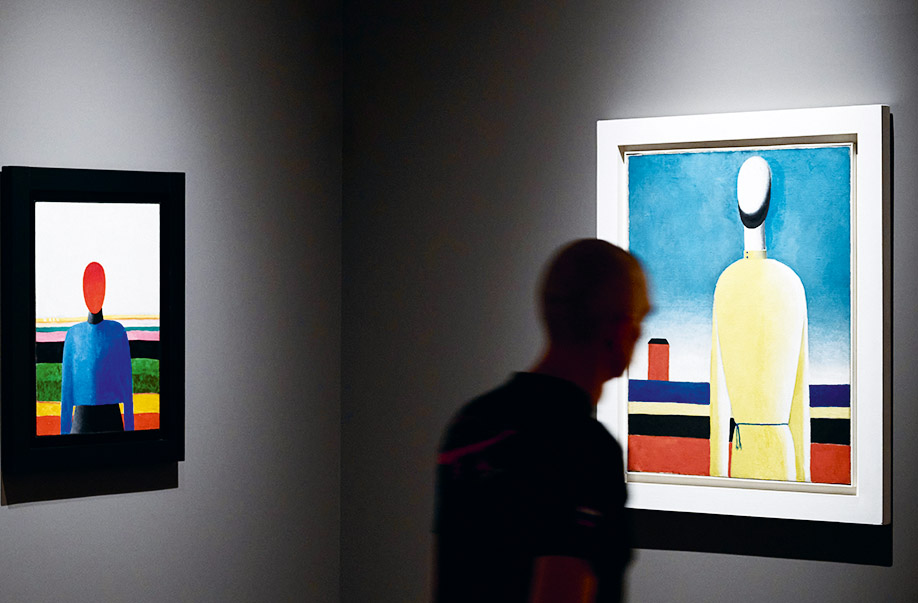
Red Square and the Kremlin are the classics, which they will see without my help. But to truly surprise a guest from Riyadh or Abu Dhabi, I take them to the New Tretyakov Gallery on Krymsky Val, to our modernists. At first glance it seems an unexpected choice, yet there is profound sense in it. The Arab world is itself living through an era of extraordinary visual and architectural renaissance. When they see the energy of the Russian avant-garde, the dynamism of Malevich or Kandinsky, they read it instantly. For them it speaks of the will to change and the scale of thought — things very close to their hearts. It always sparks genuine interest. We walk through the galleries, and I watch them stop dead before canvases that once turned world art on its head.

This shows them Russia not merely as an exporter of resources, but as a formidable intellectual and cultural powerhouse. After such a walk, we usually head to a nearby restaurant to discuss business. And believe me, after Kandinsky, a conversation about high technology or investment takes on an entirely different tone — bolder and more visionary. We present Moscow to them as a city of meaning, not simply a dot on the map.
And what do your Arab partners like most about Moscow and Russia?
You may be surprised, but it is often not luxury or business centres that top the list, but our parks and greenery. For people who have grown up in a climate where every bush requires artificial irrigation, Moscow’s Zaryadye or Gorky Park is a veritable paradise. They can spend hours strolling by the water, simply relishing the fact that in Russia nature is not a luxury but the natural environment.
But when it comes to what Arab guests themselves shared after visiting Russia, it is safety and technology. Moscow genuinely astonishes them in this respect. The way our banking apps work, the speed of deliveries, FacePay on the metro — they see here a city of the future that outstrips world capitals in many respects. For them, Moscow is a ‘smart city’ where you can also walk about safely at three in the morning.
In Moscow, St Petersburg and Yekaterinburg, they also admired the architecture and the imperial style. Our architectural ambition resonates deeply with them. The Stalinist skyscrapers, the broad avenues, the grandeur of the metro — all of this echoes their own drive to build “the biggest and the best”. They sense the energy of a great power here, and it commands their respect on a subconscious level.
Our Arab partners have always admired the sincerity of our people. For all our outward severity, Arabs greatly value Russian warmth. Once the ice of mistrust melts and a genuine conversation begins, they see us as people of our word, ready for a long and honest friendship. And, strangely enough, they are fond of our winter — in moderation, of course. The sight of snow-covered Moscow through the window of a cosy restaurant serving excellent food is absolute exotica to them, much as a desert safari is to us. It creates precisely that emotional attachment which brings them back to Russia time and again.