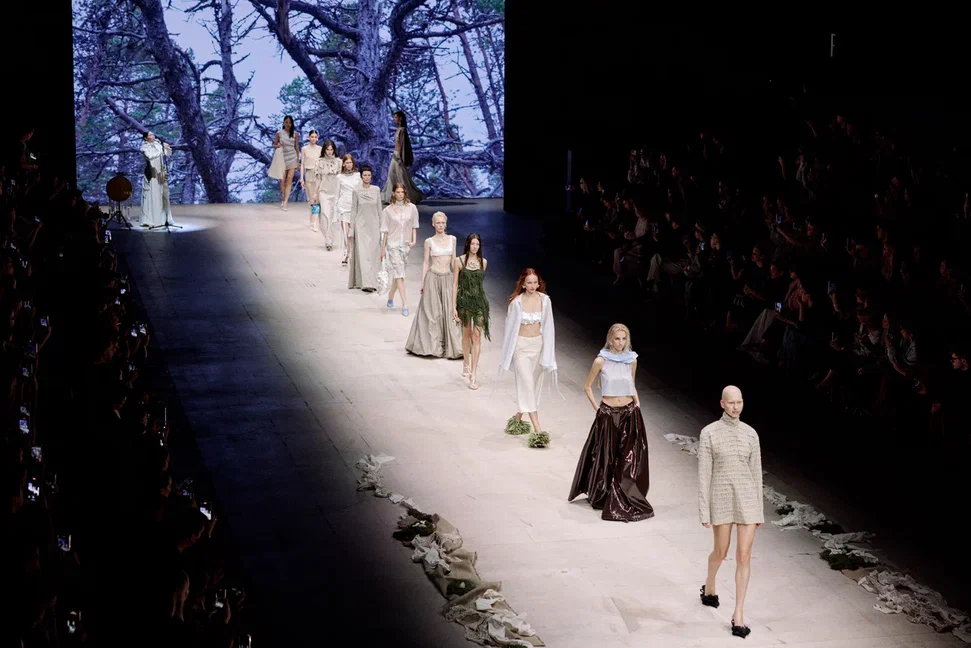
For centuries, the West has indulged in Orientalist fantasies, inventing an East of its own. We reflect on Orientalism as a European idea of the East and on the influence of Eastern imagery upon Western visual culture.
Orientalism as a style emerged in the fine arts in the 19th century. Following Napoleon’s Egyptian campaign, the European public wished not only to read about the East but to see it. Eastern subjects became an important theme for two largely opposing groups of artists: the Romantics, who sought to escape beyond the familiar into a non-European world, to encounter and understand the Other — which, for them, included the East; and the Academicians, who used Oriental scenes as a pretext for injecting colour, sensuality and even frank eroticism into academic salon painting. Yet the tradition of imagining the East — of the West inventing an idealised Islamic world (which is precisely what we shall call “the East” here, setting aside China, Japan and India, about which Europeans fantasised no less) — naturally has a far longer history than Orientalism as a style.
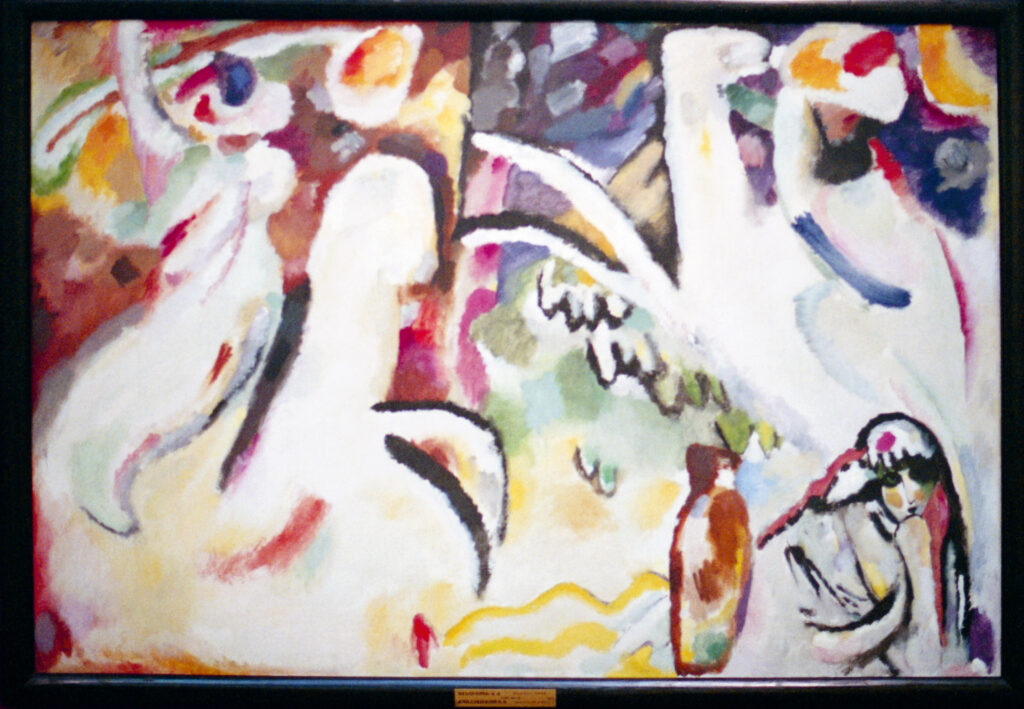
Discourse about the East appeared in European culture immediately upon the first encounter with it, which was far from peaceful: in the 8th century came the Arab conquest of the Iberian Peninsula and the beginning of the Reconquista, the reconquest of that territory, which lasted for seven centuries. In its confrontation with the Islamic East, Europe discovered itself — as a single Christian community. Coexistence with another culture, with which, over those seven centuries, Europeans naturally not only waged war but also traded and engaged in every manner of exchange, allowed European art to perceive a different imagery, other artistic canons and stylistic solutions, broadening the horizons of Western visuality, enriching and complicating it.
In 2025, one of the leading painters of the Proto-Renaissance, the Florentine master Cimabue, has at last been granted a solo show at the Louvre — the museum is presenting Revoir Cimabue (“Revisiting Cimabue”), the first retrospective ever devoted to him. The occasion for revising our understanding of an artist who still belonged to the Middle Ages and the Byzantine canon yet was already opening the way to the Renaissance and its new art is the completion of a three-year restoration of his Maestà. This four-metre altarpiece of the Virgin Mary enthroned in majesty with the Christ Child on her lap, surrounded by angels, was painted by Cimabue at the end of the 13th century for the church of Santa Trinita in Florence. The conservation work revealed a great deal that genuinely resets our perception of his painterly method: brighter colours (cobalt blue in place of dark tones, pink instead of dull red), astonishing modelling of the bodily forms (the legs of Christ) concealed beneath the drapery, and… Arabic inscriptions on the haloes, the cloth covering the throne and the red band of the picture’s original frame. During the previous restoration, in the 19th century, these curious inscriptions had been painted over.

How did Arabic calligraphy come to appear on a Christian icon? These are pseudo-inscriptions, devoid of any discernible meaning, yet they include two of the 99 Beautiful Names of Allah. Restorers identified the text thanks to a 13th-century Mamluk glass goblet in the Louvre, dating from the same period as the Maestà. Cimabue could well have seen such script on other Islamic decorative objects that were being imported into Italy in great numbers at the time — ceramics, metalwork, textiles, woodwork and so forth. He could not read Arabic and may not even have realised it was writing. Cimabue regarded the flowing Arabic script simply as a decorative motif, an ornament, copying it as a pure visual artist — much as we today might get a tattoo of a Chinese character merely because ‘it looks beautiful’.
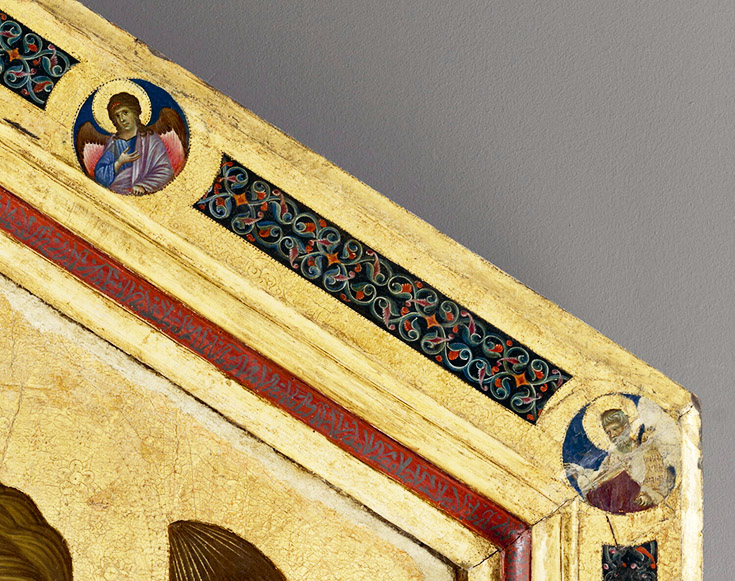
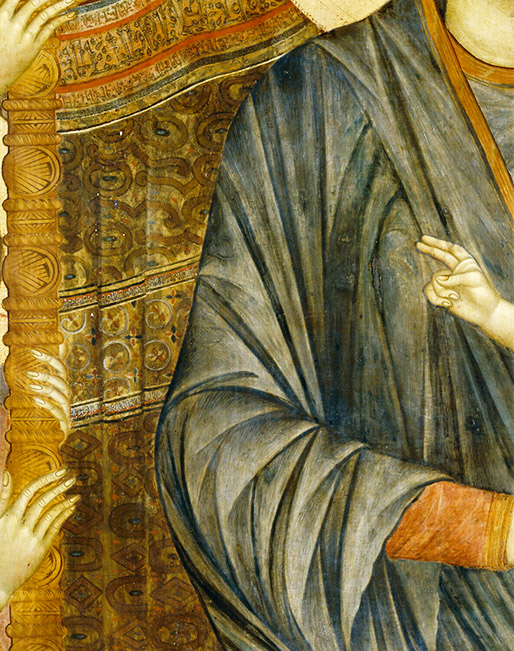
Such pseudo-Arabic inscriptions are a fairly common motif in the art of the Proto-Renaissance and Early Renaissance. They appear not only in the work of Cimabue, but also, for instance, in that of his presumed pupil, the great Giotto, and of the Sienese masters Duccio and Simone Martini. They can likewise be found on European coins and in many other places. In the Late Middle Ages, thanks to pilgrimages, the Crusades and the flourishing of trade, Europe was seized by a genuine — and perhaps its first — obsession with the East. Eastern goods became especially prized luxuries; Arabic texts were translated and read (above all treatises on astrology, alchemy, magic and gnosticism), and people even occasionally dressed in the Arabic manner. It is said that in 1245 the philosopher and theologian Albertus Magnus arrived in Paris attired in Arab fashion to demonstrate his learning, for in the European mind Muslims had by then been transformed from ‘pagans’ into ‘philosophers’. And into ‘artists’, too, given that motifs described at the time as ‘Moorish’ penetrated the Gothic style, while Kufic script, one of the oldest forms of Arabic calligraphy, became established as an ornamental device. None of this, however, did anything to diminish the confrontation between Christianity and Islam, West and East. As the historian Franco Cardini writes in his brilliant book Europe and Islam: The History of a Misunderstanding, ‘the fashion for all things Eastern coexisted with the constantly revived idea of the crusade. Europe found itself in the position of a man who, though he has a sworn enemy, nonetheless feels an attachment to him and thinks of him constantly.’

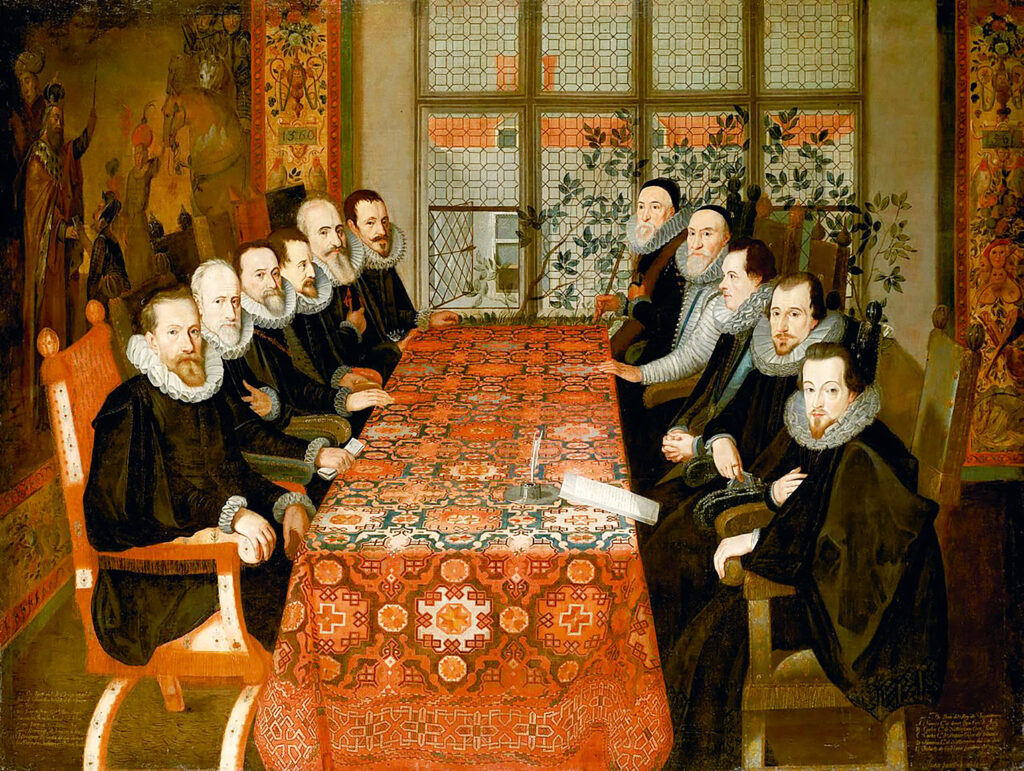
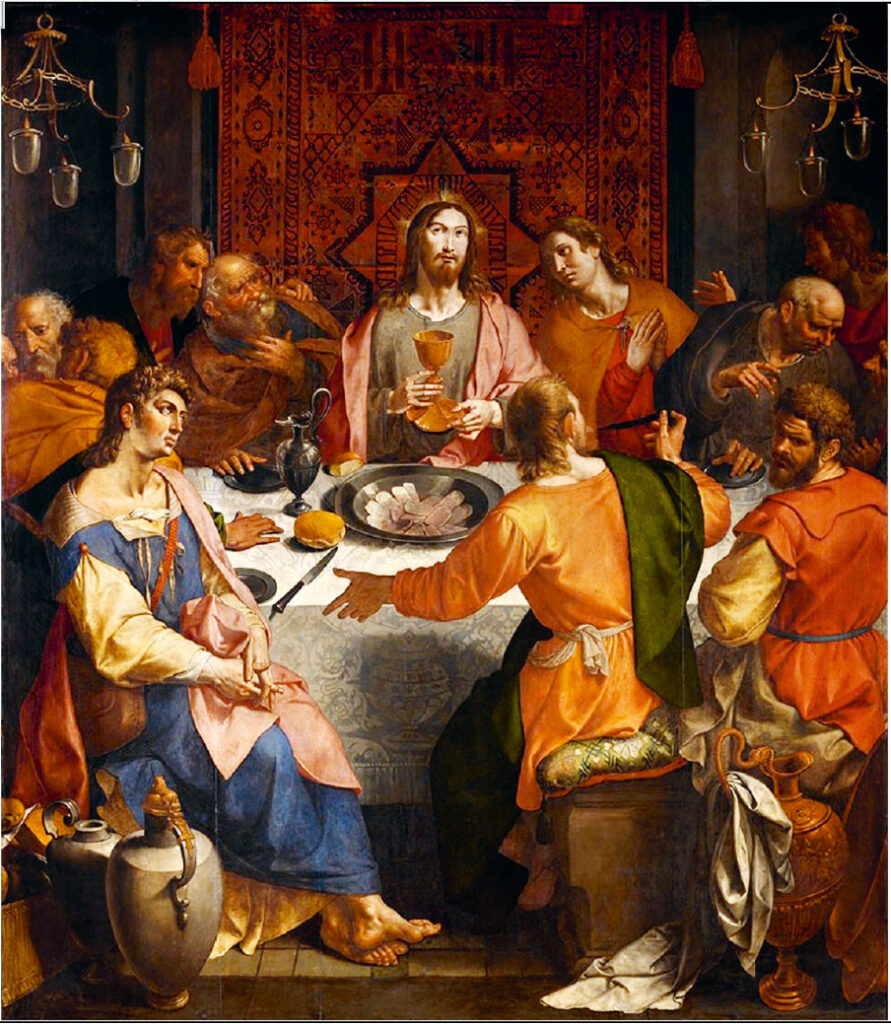
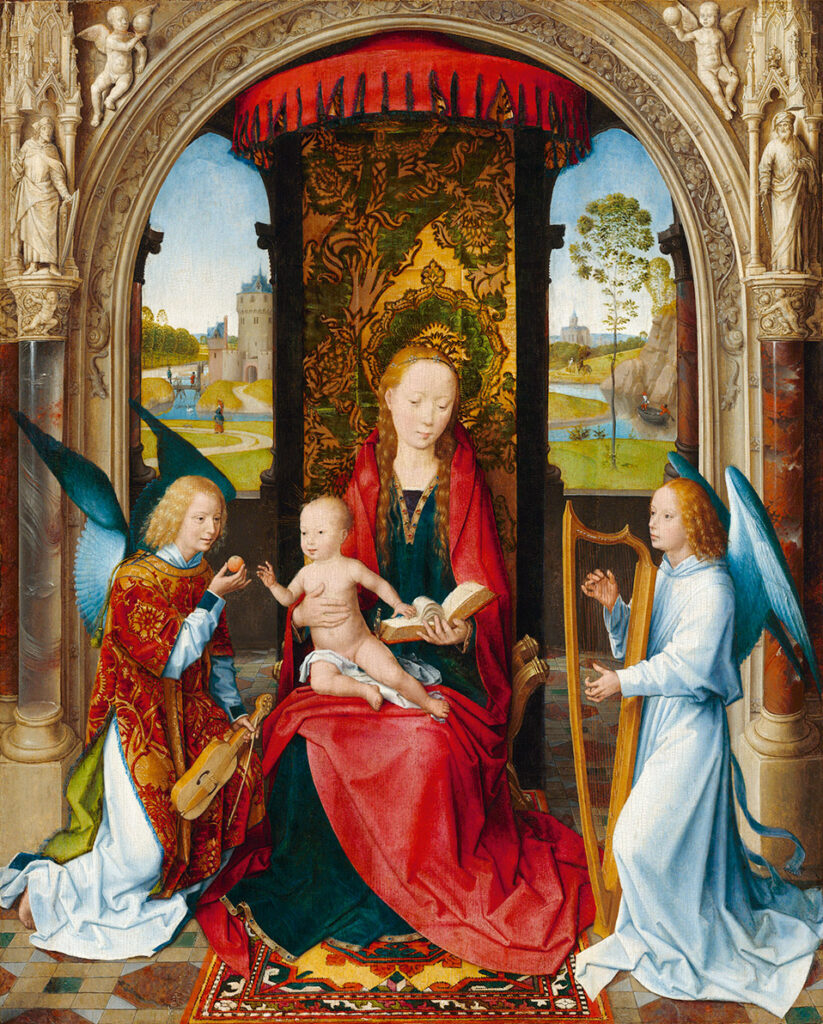
If the “Cimabue affair” — in which the name of Allah was depicted, in effect, behind the Virgin Mary’s back — struck you as implausible, it is worth noting that art history also includes a Last Supper unfolding against the backdrop of a Mamluk carpet, painted by the late 16th- and early 17th-century Flemish artist Ambrosius Francken. Alongside his painting, he traded in fabrics and carpets. Eastern carpets were highly prized in Europe and frequently incorporated into compositions by artists. The Virgin Mary began to appear on Muslim prayer rugs as early as the Renaissance masters: Hans Memling, Lippo Memmi, Andrea Mantegna, Gentile Bellini (the first of these painters to visit Istanbul in the 1480s, where he spent a year at the court of Mehmed the Conqueror), and others. The variegated colours of Eastern carpets evidently provided an excellent background for artists to work out linear perspective — the key discovery of Renaissance painting.
In 1672, the great playwright Jean Racine wrote Bajazet, the first tragedy of French classicism to be set not in remote antiquity but in contemporary times — in a Turkish harem. Thus the image of the harem as a place where pleasure and death reign, or Eros and Thanatos, as we would say today, entered European culture. The occasion for writing and staging Bajazet was the visit of the Ottoman ambassador Suleiman Agha to Versailles and King Louis XIV. The visit itself proved unsuccessful, but thanks to it the court sampled a mysterious Eastern beverage: coffee. The first coffee house opened in Paris in 1689, directly opposite the Comédie-Française theatre, and became a kind of intellectual salon. “Coffee is much drunk in Paris: there are many public houses where it is served. In some of these establishments the patrons tell one another the news, in others they play chess. There is even a house where coffee is prepared in such a way that it sharpens the wits of those who drink it; at least everyone who leaves it believes himself far cleverer than when he went in,” the philosopher Montesquieu would later have his hero, the Persian nobleman Usbek, observe in Persian Letters, an epistolary satirical novel first published in 1721. Many historians are convinced that the spread of coffee and tea from the East saved Europeans from wholesale drunkenness.
At the end of the 17th century, the West finally ceased to fear the Muslim East and its incursions into European territory. After the Turks failed to take Vienna in two months and were routed at Mount Kahlenberg in 1683, the Ottoman Empire’s campaigns of conquest in Europe truly came to an end. Western culture definitively dispelled its centuries-old dread of Islamic raids through laughter: comic Oriental characters began to appear in literature and music, such as Mustafa Bey in Rossini’s opera buffa L’italiana in Algeri. Europe also ate away its fears: alongside coffee, the croissant arrived in secular salons — a sweet Viennese crescent roll whose shape recalls the Islamic crescent moon, and which became a symbol of the Ottoman defeat at Vienna. Ever since, morning coffee has been served with one.
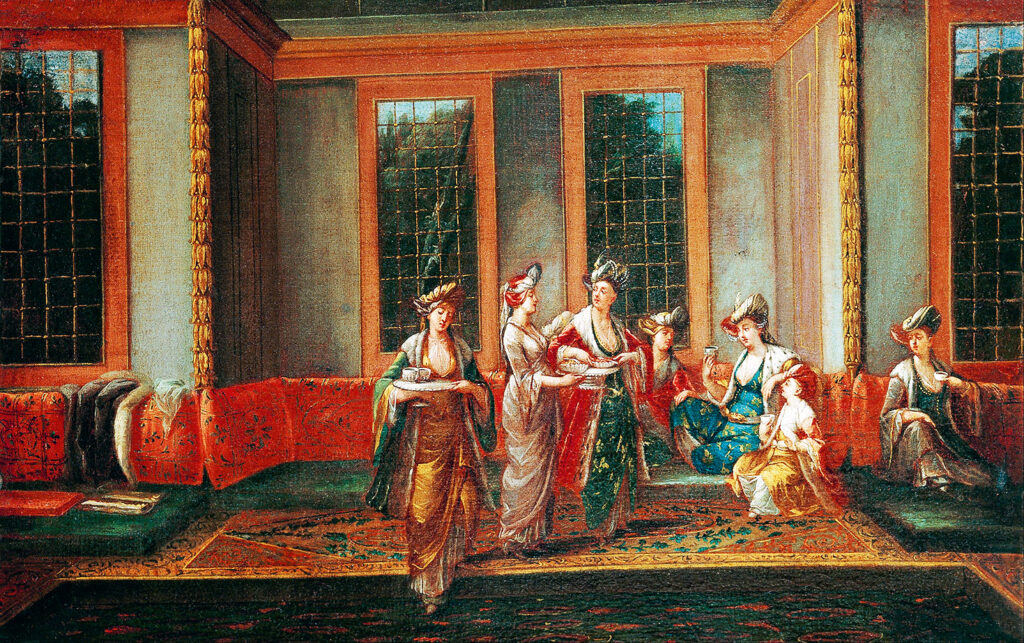
Rococo art, with its fondness for all manner of stylisations and pastiches, gave rise not only to chinoiserie and japonisme but also to turquerie — a stylistic game played in the Turkish manner across fashion, interiors, architecture, painting and beyond. Perhaps its most enduring legacy is the divan, which appeared in European drawing rooms in the mid-18th century and has never left them since. In 1704, the orientalist and antiquarian Antoine Galland published the first European translation of One Thousand and One Nights (he also translated the Koran). These tales, bound together by the story of the Persian king Shahryar and the beautiful Scheherazade, would forever acquire sensual connotations in the European mind. Many ladies of society wished to be Scheherazades themselves. They began receiving guests in their boudoirs — a woman’s cabinet à la turque — and dressing in oriental attire, as we see in paintings by Van Loo, who portrayed Madame de Pompadour as a sultana, or by Gautier-Dagoty, who depicted another of Louis XV’s favourites, the Comtesse du Barry, in the costume of an odalisque with her morning coffee (she is credited with the phrase “Hey, France, your coffee is boiling over”, mocking the French obsession with all things oriental).
Thanks to Racine and Galland, and to the Rococo with its cultivation of sensuality and privacy, the harem entered Western painting as a subject in its own right, bringing with it the myth of a voluptuous, hedonistic East (although Europe, as is well known, has always been more libertine in its morals than its Muslim neighbours). Scenes of harem life became especially popular among 19th-century artists, allowing them to paint the female nude without any constraints of censorship (the East, alongside Antiquity, served as a space for ‘permitted’ eroticism). Harem and bathhouse scenes perhaps reached their most explicit form in the work of the academic painter Jean-Léon Gérôme, a pupil of the great Ingres who clearly surpassed his master in his erotic fantasies of the East.
Projecting one’s own secret desires onto the Eastern world, distorting the morals and customs of its peoples, passing off invention for reality — all this, in the view of the American critic of Palestinian origin Edward Said, became not merely a consequence of the colonial policies of the European powers but their direct cause. Orientalism, as Said argued in his 1978 book of the same name, is a political and ideological concept rather than simply an innocent artistic style. Yet it was precisely Orientalist subjects that allowed artists to embark upon radical explorations of colour and form, as happened with Delacroix — one of the first painters to see the real, rather than the imagined, East.
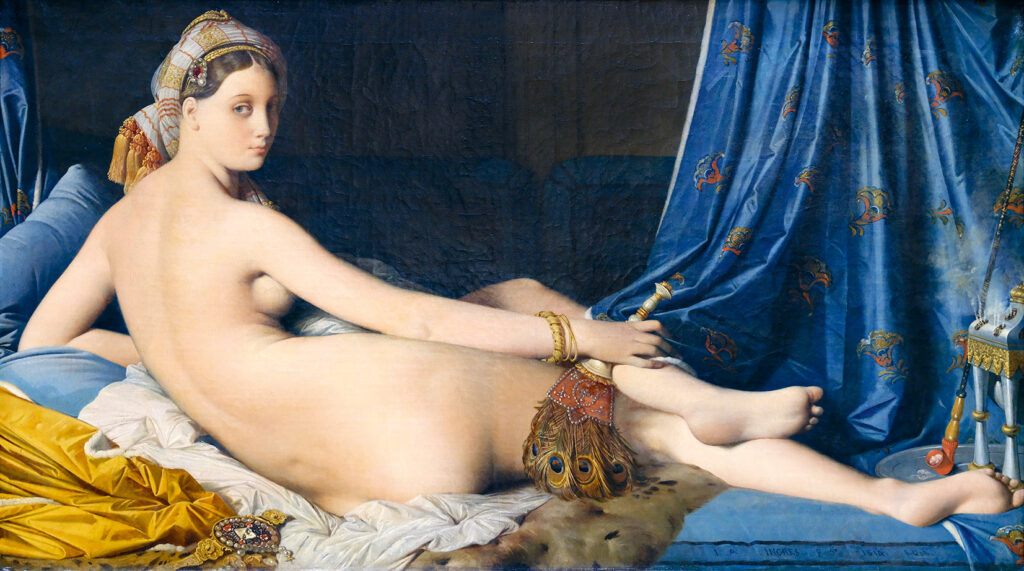
The academician Jean-Auguste-Dominique Ingres, who produced such defining works of 19th-century painting as La Grande Odalisque and The Turkish Bath, was an armchair Orientalist — he never ventured beyond Europe. His opponent and rival, the Romantic painter Eugène Delacroix, travelled to Morocco in 1832 with a diplomatic mission. The real Orient, rather than the contrived salon version, with its brilliant light, different density of air and impossibly pure colours, came as a visual shock to the artist. In his journals he recorded with astonishment that colour here does not lie on the surface of an object — it seems to permeate it from within, making the visible saturated, whole and indivisible, existing not as a decorative quality of the thing but as its form, rhythm and essence.
In 1834, at the Paris Salon, the artist exhibited The Women of Algiers in their Apartment, a work that drew sharply divided responses. “This painting is about painting and nothing more,” wrote the critic Gustave Planche. And Delacroix had indeed painted neither a harem nor a retelling of some frivolous subject in pigment, nor a visualisation of a narrative. He simply painted four figures dissolved in light, colour and its nuances, achieving chromatic unity through an inner luminous vibration. It is above all a colouristic experience — both of the moment of encountering these women and of the Orient itself. In this picture, colour ceases to be an auxiliary element; it becomes the principal bearer of meaning and atmosphere. Form is born from it, rather than form dictating colour. Thus, for Delacroix, colour — not drawing, as was customary in classical academic painting — became the primary element, a principle that would prove key to the art of 20th-century modernism.

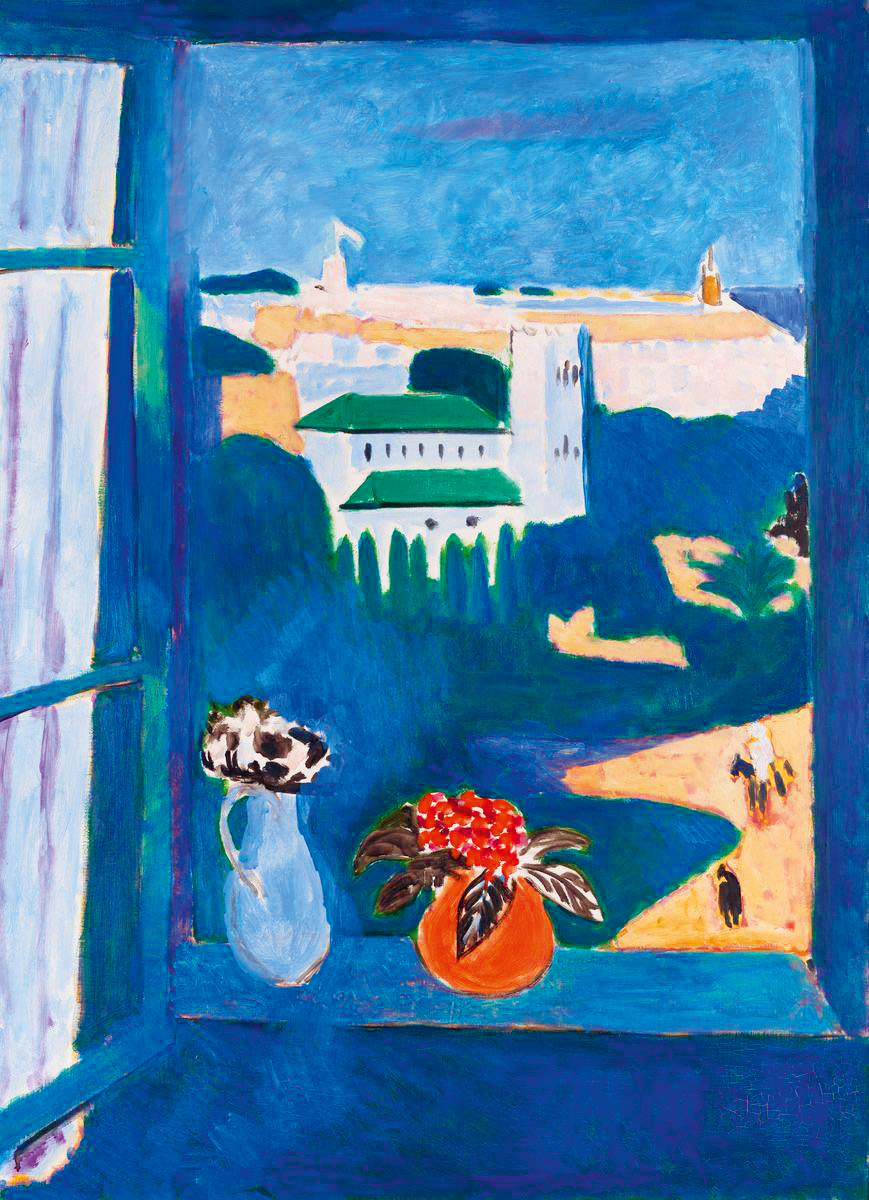
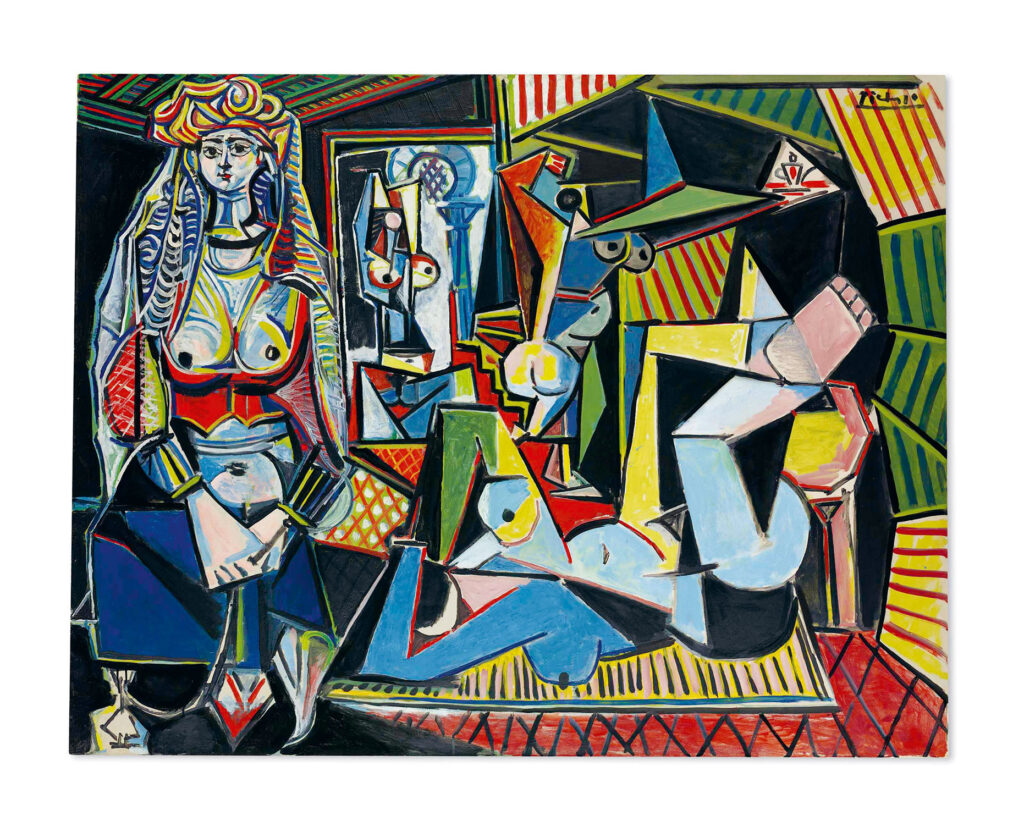
The Women of Algiers would go on to inspire artists of subsequent generations. Renoir made free copies after them. Matisse painted many Algerian women of his own. Like Delacroix, he too experienced a visual shock in Morocco between 1911 and 1913 and, under the influence of Eastern colour, managed to break out of the narrow conventions of Fauvism, discovering his signature hue — pure blue. Picasso, drawing on Delacroix, produced an entire series, The Women of Algiers, comprising 15 paintings and drawings.
Like all Russian academic painting, Russian salon Orientalism developed broadly along European lines. We see an invented, theatricalised East in the work of Karl Bryullov, for instance, or that of Henryk Siemiradzki, an erotomane perhaps no less devoted to the subject than the Frenchman Gérôme (although Russian art never featured as many naked female bodies as its French counterpart). In both cases, however, the East is thoroughly classical and balanced, pressed into the service of academicism and fitted into the “elevated” historical genre.
The radical breakthroughs in the interpretation of the Eastern theme in Russian art would be achieved by artists who had broken with academicism. Foremost among them was Pavel Kuznetsov, the leader of the Moscow Symbolists, who travelled through Central Asia in 1912–1913, at a moment of acute creative crisis. Like Delacroix before him and Matisse, working in Morocco at the same time, he transformed the East into a language of painting, using it to create a new pictorial method based on colour and mood. In Kuznetsov’s work, the East would cease to be a space of otherness and exoticism and become instead a model of absolute harmony. Gazing into the infinite distances of Central Asia, into its airy steppe expanses where nothing impedes the eye from racing towards the horizons, sinking and dissolving into the sky, Kuznetsov would seek — and arguably find — the mysteries of existence. (The search for a new modernist language on Eastern soil and through Eastern decorative forms would flourish vigorously after Kuznetsov in such a phenomenon of the 1920s and 1930s as the Turkestan avant-garde, associated with the work of Russian and Soviet artists in Central Asia.)
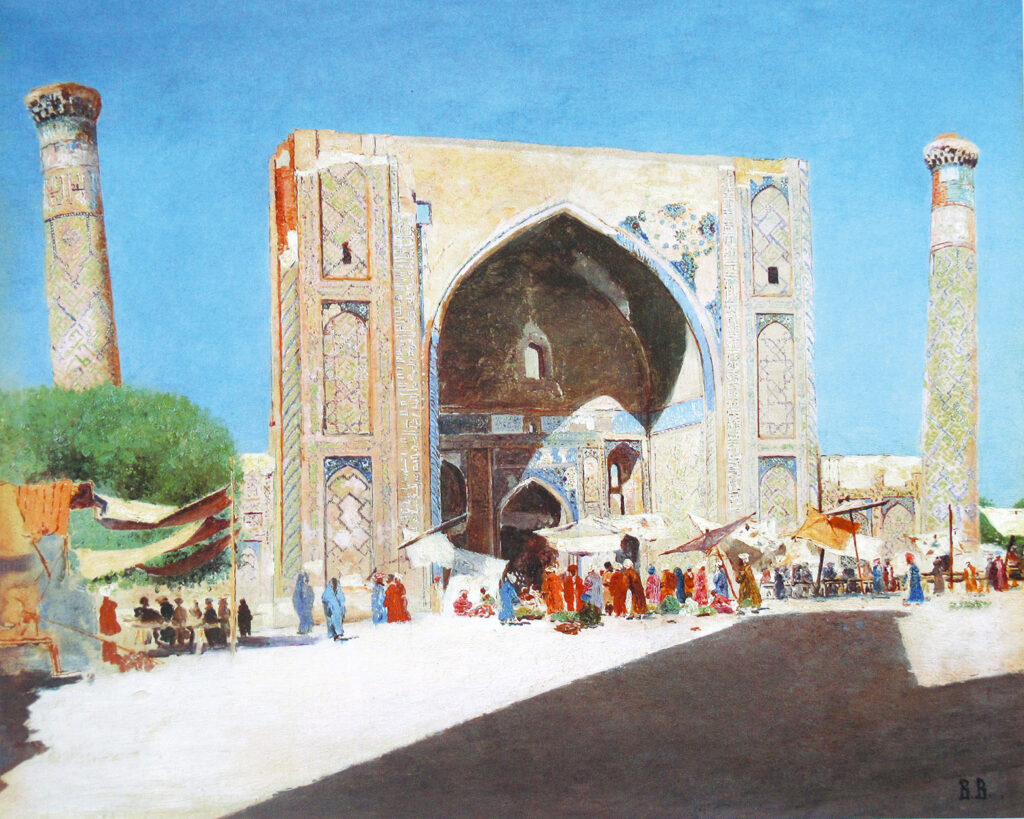
An entirely different East was introduced to world art by Vasily Vereshchagin. This artist is remarkable in that he did not merely make a single, chance voyage to Eastern countries, but spent half his life travelling (he visited the Caucasus, Central Asia, the Middle East, India and the Himalayas, China and Japan, as well as America and the countries of Europe). And in the East, Vereshchagin saw neither beautiful colour and light, as Delacroix or Matisse did, nor harmony, as Kuznetsov did, nor beauty and sensuality, as
Jérôme (with whom Vereshchagin studied in Paris). Vereshchagin combines the aesthetic with the political and begins to present the East as it is, without theatricality or fantasy, through the eyes of an artist who arrives in this foreign, alien land alongside a general in order to conquer it (in 1867 Vereshchagin joined General Konstantin von Kaufman’s Central Asian campaign). By showing not the triumph of victory but the consequences of war in his battle scenes, and by refusing to aestheticise the Other in his Orientalist subjects, Vereshchagin adopts an anti-academic and anti-romantic position. And this is an Orientalism that becomes a form of critique of the very genre of Orientalism.