Co-owner and General Manager of the Okno aparthotel, Susanna Martirosyan, on rich Russian culture in hotel interiors
Not long ago, on Petrovka Street in Moscow, the Okno boutique aparthotel opened its doors in an 18th-century building with broad windowsills, thick walls and large windows overlooking a quiet Moscow courtyard. Its design concept, developed by Yulia Gamidova, is built upon the Russian code. And the hotel adds new stories and visual solutions to it. Suzanne Martirosyan told us how the property immerses guests in Russia, its culture and its riches through the details of its interiors.
There is a beautiful metaphor in the name of your hotel: for your guests, you are a window onto Moscow and Russia. How does Russia appear in your concept, and what story about it do you tell at the Okno aparthotel?
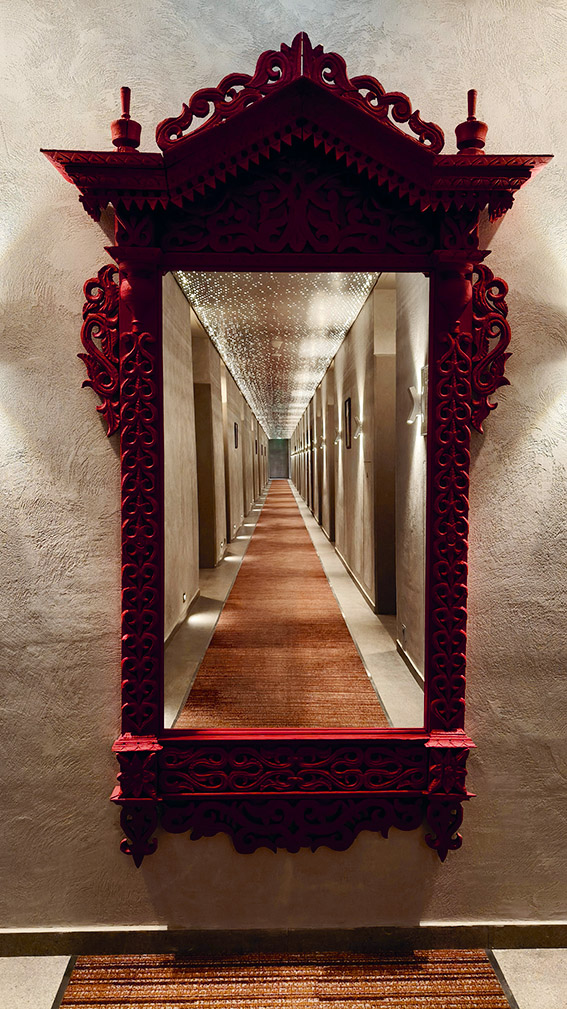
We are on Petrovka, one of Moscow’s principal historic streets, beside the Vysoko-Petrovsky Monastery. And the name ‘Okno’ — Window — is no accident. We all remember the saying that Peter the Great ‘hewed a window into Europe’; what we have created is a window into Russia. We wanted to show how rich our country is, not through literal stylisation but through details: carved wooden architecture, traditional crafts, colour, texture and handwork. On the second floor, for example, there is a mirror made from an authentic wooden window architrave. It was taken from an old house, restored and incorporated into the interior. The hotel contains many such references. Amber tones recall the Kaliningrad region, while Mezen painting evokes the Russian North. Traditional crafts such as Gzhel, Khokhloma, Palekh and Vologda lace appear in the details of the interiors. Motifs of the tree of life and the phoenix bird, a symbol of fertility and rebirth, recur in the headboards, doors and textiles. We have dried flowers gathered from across the country, from Kaliningrad to Kamchatka. Russia cannot be reduced to its capital, and we are delighted to show our guests the full breadth of the country’s geography through these details.
Your hotel is filled with incredible design pieces and details. Which are your favourites?
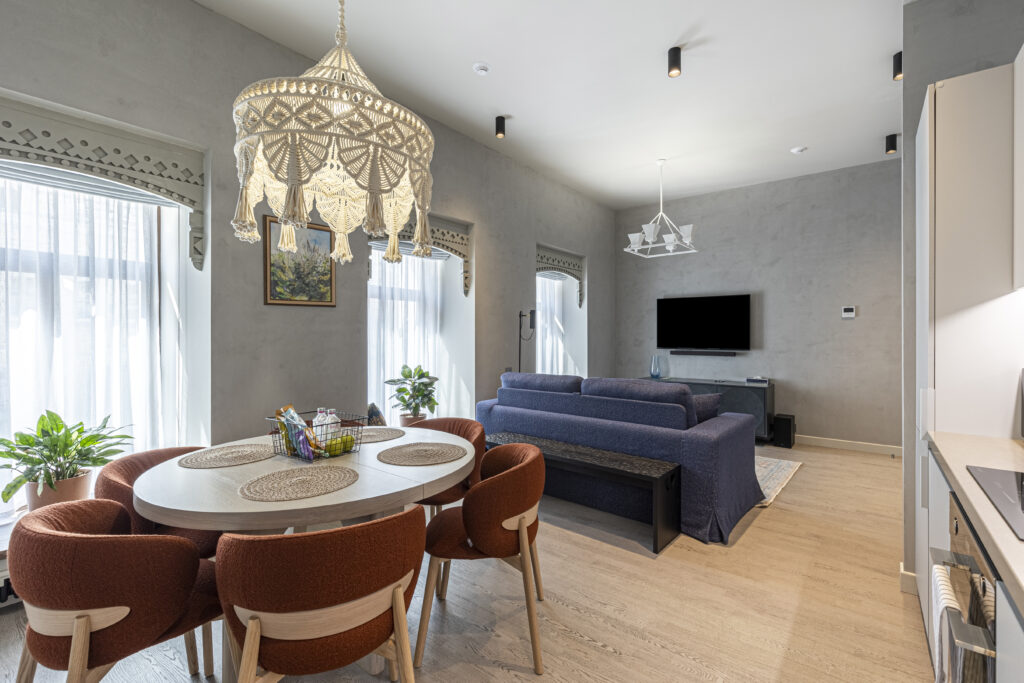
I am fond of objects with a story behind them. The ‘Efrosinya’ lampshade is one such piece. We commissioned a series of macramé lampshades from a craftswoman in Altai. She was expecting a baby when she took on our order. For several months she knotted our large, intricate shades by hand, finishing the last one just before going into labour. She named her daughter Efrosinya — and so, in her honour, that is what we now call our lampshades too.

There is a table made of bog oak. It was found in Kabardino-Balkaria at a depth of 12 metres. Radiocarbon analysis revealed that the wood is around 1,400 years old. This is not merely a piece of furniture, but an object that embodies a sense of time.
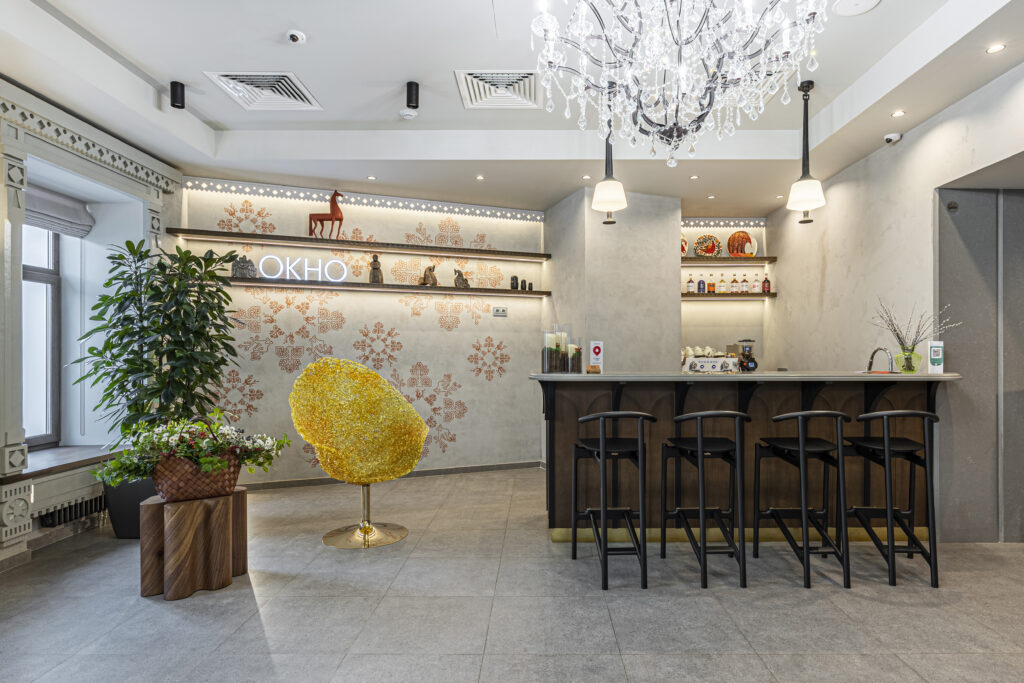
I am very fond of the wooden figures of Old Russian horses in our hotel: they were carved by a church restorer from old beams. Those beams are 200 to 300 years old, with a distinctive texture, the scent of frankincense and the memory of the wood.
In the fireside area we have cast-iron plates dating from the late 18th and 19th centuries. There, too, stands an antique piano that once belonged to Zoya Izgarysheva, the legendary phoniatrist of the Bolshoi Theatre. For some 40 years she saved the voices of opera stars, including Elena Obraztsova, Lyubov Kazarnovskaya and Montserrat Caballé. We fitted it with a modern mechanism, so now the piano can play itself. We joke that we have our own ghost — an invisible pianist.
I love the fact that our hotel features so many works by specific artists, discovered and brought together by our chief designer, Yulia Gamidova: panels by Masha Dolgova, pieces by Marina Shamsudinova, paintings by Nadezhda Elkina and Irina Uzdina. We don’t hide the names of these makers; on the contrary, we tell our guests about them. After all, this hotel has drawn together people who poured their hearts into the project.
What do you consider the ideal guest experience: what should a visitor feel in the first 10 minutes of arriving at a hotel, and with what emotions should they leave?
The first 10 minutes are crucial. When you walk through the doors of an unfamiliar hotel, it is not logic that takes over but your senses: the scent, the light, the visual impression, the receptionist’s voice, the way you are greeted. We have no towering reception desk to make a guest feel kept at arm’s length. You can sit down, have a cup of tea or coffee and complete the paperwork at your ease. If guests arrive with children, there is a play area nearby so that a child can amuse themselves while their parents check in.
From there, the guest walks along the corridor, taking in the paintings, the details and the ceiling, which is styled to resemble a starry sky, before arriving at their room. Our rooms bear no resemblance to standard hotel stock with its fitted carpets and identical furniture. The apartments have parquet flooring, rugs, vases, flowers, paintings and fully equipped kitchens. There is a hob, an oven, a large refrigerator, tableware, a coffee machine, a blender and all manner of kitchen bits and pieces, such as a whisk. For families and those staying for longer periods, this matters: here, a guest can truly live, rather than merely spend the night.
We paid particular attention to sleep. The mattresses were made to order and we selected a variety of pillows. Each room offers both softer and firmer options, and we also provide a pillow menu: orthopaedic, down, bamboo, buckwheat and silk.
And after they leave, I want our guests to take away not merely a memory of a beautiful interior, but the feeling that ‘someone here thought of me’. We send guests off on their journey with apples, water and a cockerel lollipop on a stick — it is a small detail, yet one bound up with childhood, the fairground and fairy tales. Sometimes it is precisely such things that linger in the memory.
Your hotel was a prizewinner at the Cleanliness Olympics. And in their social media comments, guests consistently praise your high housekeeping standards. In your view, what matters more for a hotel’s success today: a strong concept or operational perfection?
I don’t think the two can be separated. You can create a very strong concept, but if a guest spots dirt, the entire impression is ruined. And vice versa: you can clean impeccably, but if the space is faceless, it won’t stay in the memory.
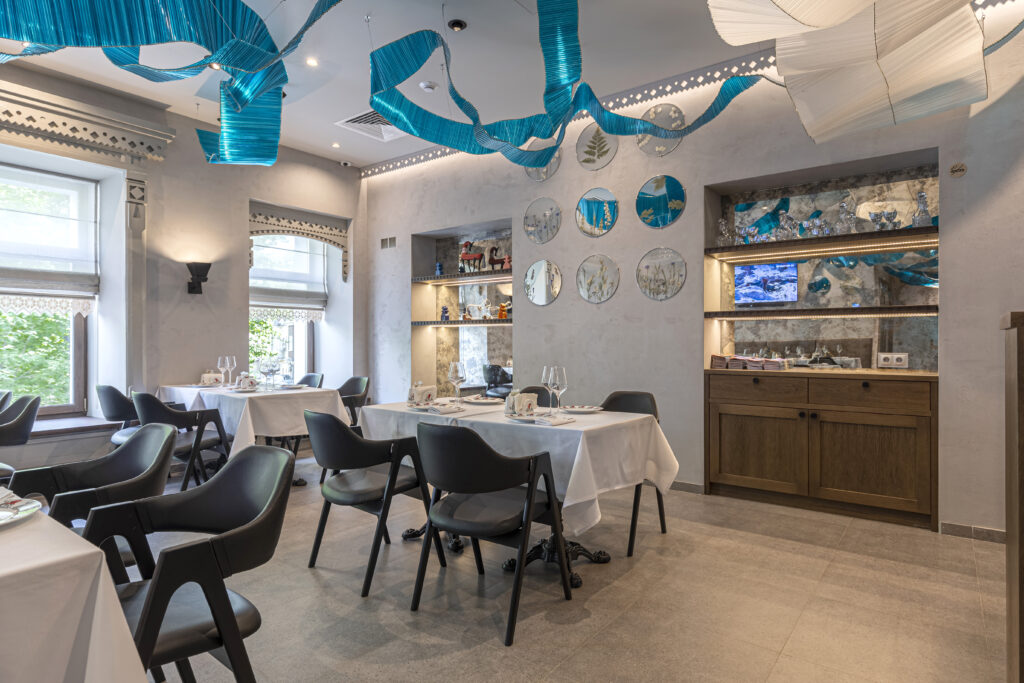
We really do devote a great deal of attention to housekeeping. This is especially important for families with children: if a parent sees that their child can crawl freely across the floor, that in itself is a measure of trust. But cleanliness is only one part of the overall system. A hotel operates as a complex mechanism: cleanliness, service, interiors, communication, the speed of response to requests and care for the guest must all come together into a single system.
Today’s guest is extremely attentive. He reads reviews, and the negative ones first of all. He scrutinises how expectation matches reality. That is why everything matters: how he was spoken to on the telephone, how he was greeted, how he was shown to his room, how clean it is, whether the bed is comfortable, whether the appliances work, whether his special requests were noted. Our hotel is a family business, and we treat our guests with the utmost care and warmth, offering them love, comfort and security. When they return to Moscow, our guests know that they have a home of their own in the very heart of the city.
You recently received the Russian Hospitality Award as Russia’s best aparthotel, and almost immediately after opening you became a finalist for the Guiding Star award, presented by the Moscow government in the field of tourism and hospitality. What is the main trend on the Moscow hospitality market today? How ready is it for radical experiments with hotel concepts?
I think there is a very clear demand today for hotels with character. Guests no longer want just a room. They want a place with an idea, a history, a sense of identity. We happened to catch the trend for rethinking Russian culture — not in the form of souvenir-style pastiche, but through contemporary design, handcraft, bespoke objects and local narratives. When we first conceived the project, this theme was not yet so obvious. Now it is clear that interest in the Russian code has grown considerably.
For the market, however, this remains something of an experiment. Moscow has no shortage of fine hotels, but the aparthotel format — one that brings together proper residential living, boutique design, a Russian cultural theme and a narrative told through objects — is a rarity.

How has the guest profile changed: who is coming to Moscow today, and what are they looking for that they didn’t seek before?
It seems to me that today a stay is perceived as an investment in emotions. People are prepared to pay more if they understand what they are paying for. Our guests often say that we are even better in person than in the photographs.
Families, business travellers, foreign visitors, creative types and aesthetes all come to stay. Some seek quiet, others a beautiful space; some want the convenience of an apartment, others a cultural experience. We host musical and poetry evenings, intimate events, meetings with artists and performers, and exhibitions where paintings can be purchased. As a result, the hotel becomes not merely a place to stay, but a small cultural venue in its own right.
Some guests value the feeling of being at home, and arriving from all corners of Russia, they find it here. Someone might choose the Vologda room because they have ties to the city or family memories there. Others are drawn to Khokhloma, Palekh or the rooms decorated with northern motifs. Everyone will find a setting and a way to spend their time that suits them perfectly. For instance, we have exceptionally wide windowsills (our building dates back to the 18th century) with cushions for those who enjoy unhurried reading, and books can be taken straight from our library.
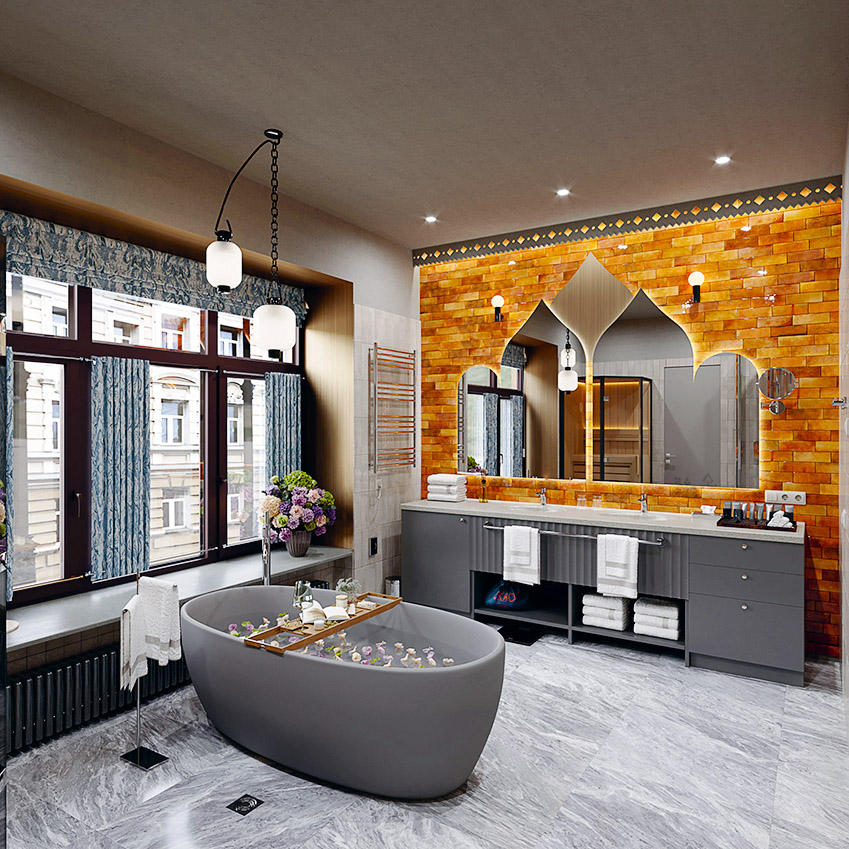
Are you ready today for Arab and Chinese tourists, with their rather specific requirements?
We try to prepare not merely as a formality, but by immersing ourselves in our guest’s culture and understanding it. For example, every room contains an individually wrapped prayer mat, which is an important detail for guests from Muslim countries. A bidet shower — a shattaf — is also essential for Arab guests. We have them. A well-equipped, fully functioning kitchen makes it possible to prepare the familiar food that some travellers miss so keenly when they are away from home.
We have also recruited Arabic-speaking staff. When someone arrives in another country and hears their native language, it gives them a sense of security.
Location matters to foreign guests too: Petrovka is the very heart of the city, and the Bolshoi Theatre or Red Square are just a five-minute walk away. Our concierge service operates around the clock, helping to arrange excursions and put together a cultural programme. For Chinese and Arab travellers, Moscow is often not merely a stop on their itinerary but an introduction to the country. And it is important to us that this introduction is both beautiful and comfortable.


