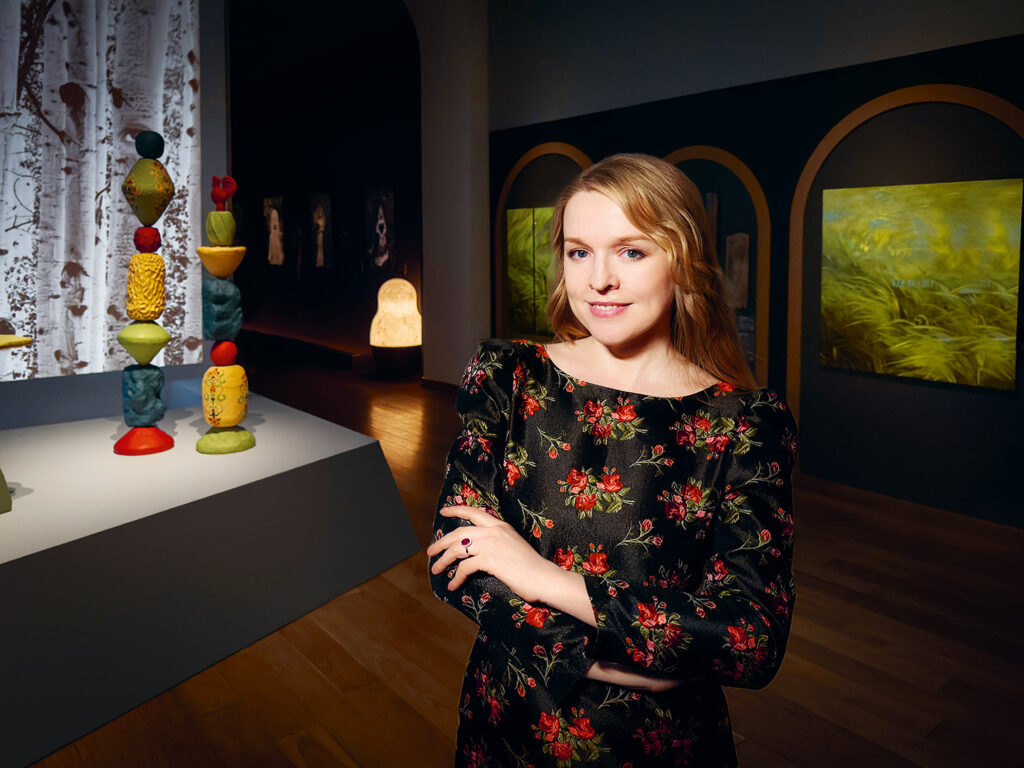
Natalia Yustitskaya, founder and curator of the SVOYASI project, explores all things Russian — archetypes, symbols, rituals, imagery and patterns of thought — and is convinced that only traditional culture can save the modern world from a deficit of meaning.

The SVOYASI cultural project is now in its third year. Founded and curated by Natalia Yustitskaya, it explores the phenomenon of the Russian cultural code by reinterpreting the visual imagery of folk culture, key aspects of identity and archetypal structures that are being brought to life within the contemporary cultural context. From mid-May until 7 September, the State Historical Museum (SHM) is hosting the project’s fourth exhibition, bringing together 100 artists, designers and craftspeople from across Russia and devoted to the future — specifically, how it is imagined within the Russian tradition. We spoke with Natalia about how traditional culture protects us from the impoverishment of everyday life and why tourists have lost interest in bears playing balalaikas.
The theme of national traditions, identity and cultural codes is very much in vogue right now: exhibitions, markets, restaurants, new brands and so on keep appearing. Don’t you feel that there has simply become too much of everything “Russian” around us?
That is precisely what we were working so hard to achieve — to have as much of it as possible! Now, on the contrary, it feels as though the first great wave of interest has receded, a brief lull has set in, and everyone is waiting to see how the subject will develop next. The initial interest really was powerful and swept through many spheres — everyone became captivated by external attributes and bold forms. But following on from that, a deeper interest is now emerging: a desire to study traditions and the profound meanings embedded within the culture. Naturally, we abandoned crude lubok-style clichés such as bears with balalaikas right at the very beginning, but now we are going further still and striving to speak about tradition in the language of contemporary art. In this immersion into the depths of tradition, the main emphasis shifts to the lifestyle of modern man, his needs, and the language he is accustomed to using when speaking about important things. We are moving from mere decoration towards reinterpretation.
I am speaking here of the general tendencies I see around me, but these shifts can also be traced through the example of the SVOYASI project. Our first exhibition was devoted to ritual — we spoke, for instance, about the festival of Ivan Kupala and its traditions, and discussed pre-literate sources. Gradually, however, we began to encounter more and more artists who, through installations and digital art, speak of their personal experience of tradition, of childhood — since most artists and visitors alike first came across manifestations of tradition precisely in childhood. Many had grandmothers who baked bread, sang songs and knew how to weave. Our parents’ lives fell during the Soviet years, when all of this had practically vanished into oblivion. Today’s adults, however — let us call them, broadly speaking, millennials — are precisely the ones nostalgic for a childhood spent in the village with their grandmother, encountering tradition as something entirely natural.
The current exhibition, the fourth in the series, which has opened at the State Historical Museum, is quite different. Here we make a deliberate departure from traditional aesthetics, from admiration for the outward form of folk motifs and even from personal memories and nostalgia, turning instead to an analysis of cultural archetypes in order to better understand present-day reality. The main theme of the exhibition, reflected in its title, is “Traditions of the Future”.
What were the other exhibitions about — what fitted between ancient rites and the traditions of the future?
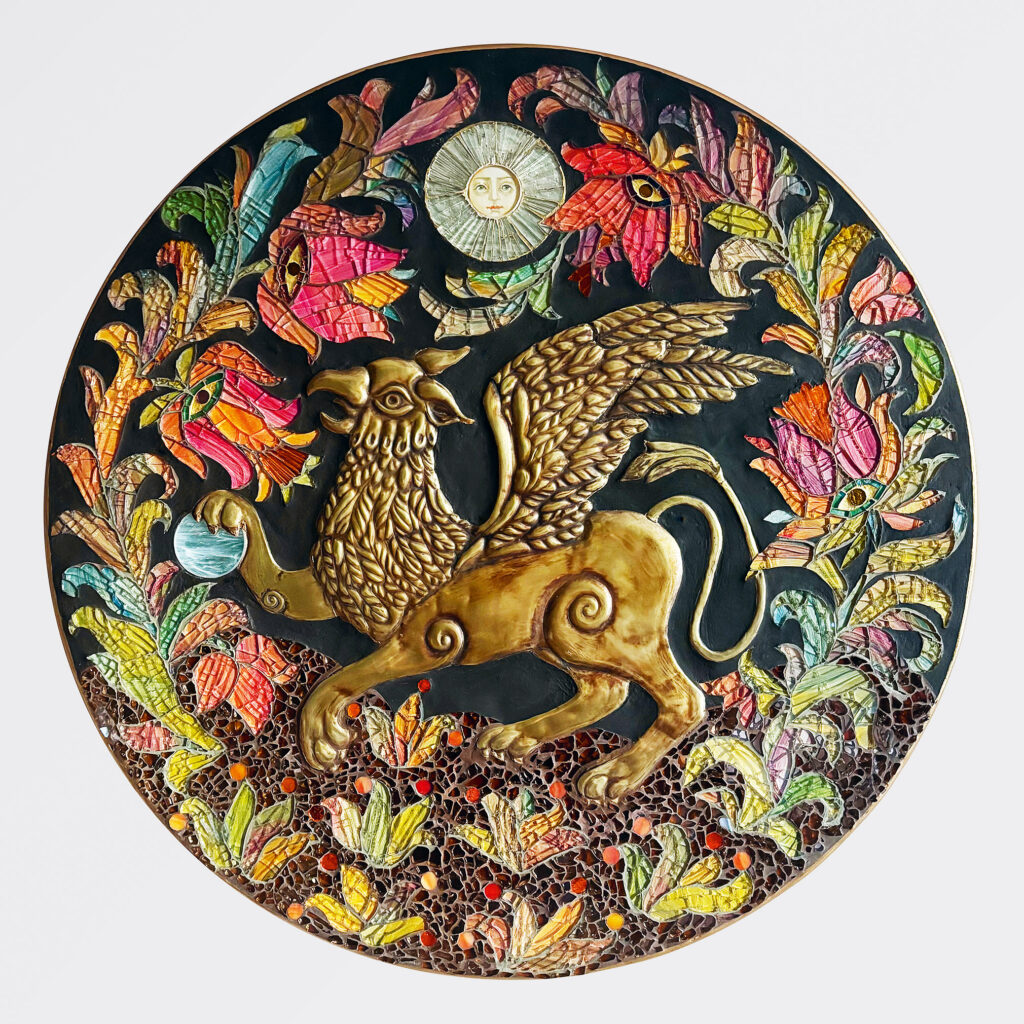
At our second exhibition we spoke about ornament and vyaz — an ancient means of, to use modern parlance, programming reality. Every pattern is a specific wish, a message carrying its own corresponding energy. Last year the exhibition was entitled “The House as a Space of Being”: through the layout of the peasant izba we analysed man’s perception of the world. Nothing in the izba was left to chance; everything was considered and ordered, so that the earthly structure reflected the structure of the universe.
And what is ‘Traditions of the Future’ about?
At this year’s exhibition, we are looking, on the one hand, at what will happen in 50 to 100 years’ time, and on the other, at how the way we live now will itself become a tradition in the future. And how do we live? Chaotically, chasing false, imposed ideals? Or do we still understand what is genuinely valuable and important? When we prepare an exhibition, the artists submit works based on a set theme, but the angle they find within it is always a surprise, and in the end some sections of the display are shaped by the pieces that arrive. It is true collaboration.
For instance, I would never have guessed that chthonic motifs would prove so relevant to so many artists. In ancient Greek, “chthon” means “earth, soil”. The word denoted the untameable power of the elements, as well as the forces of the underworld. I had not planned to touch upon this subject, yet it turned out that a great many authors have long been working fruitfully in this vein. Looking through the submissions, I reflected that an interest in culture cannot be one-sided — almost all folk tales have been edited, whereas their original plots are far harsher; one need only recall Afanasyev’s collection of frightening tales. If one is to study one’s own culture fully and with love, it must be accepted in its entirety, recognising in its twilight narratives a warning, and in the theme of the otherworld a source of renewal.
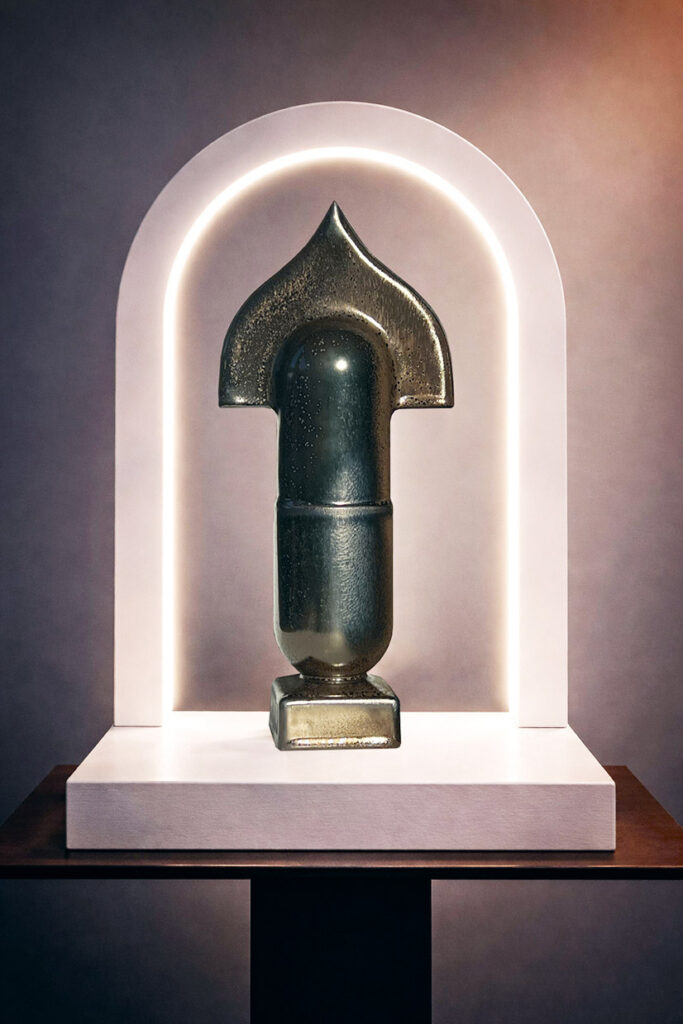
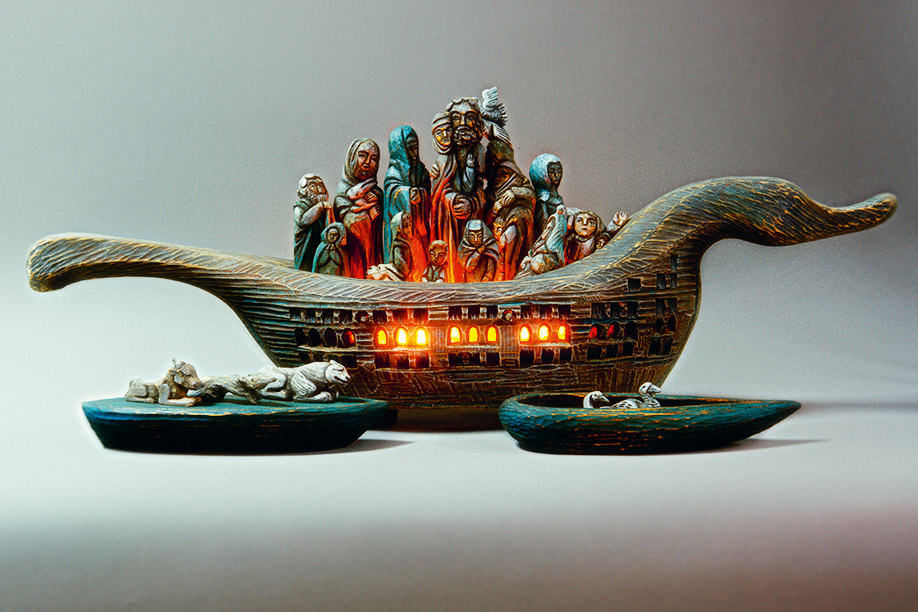
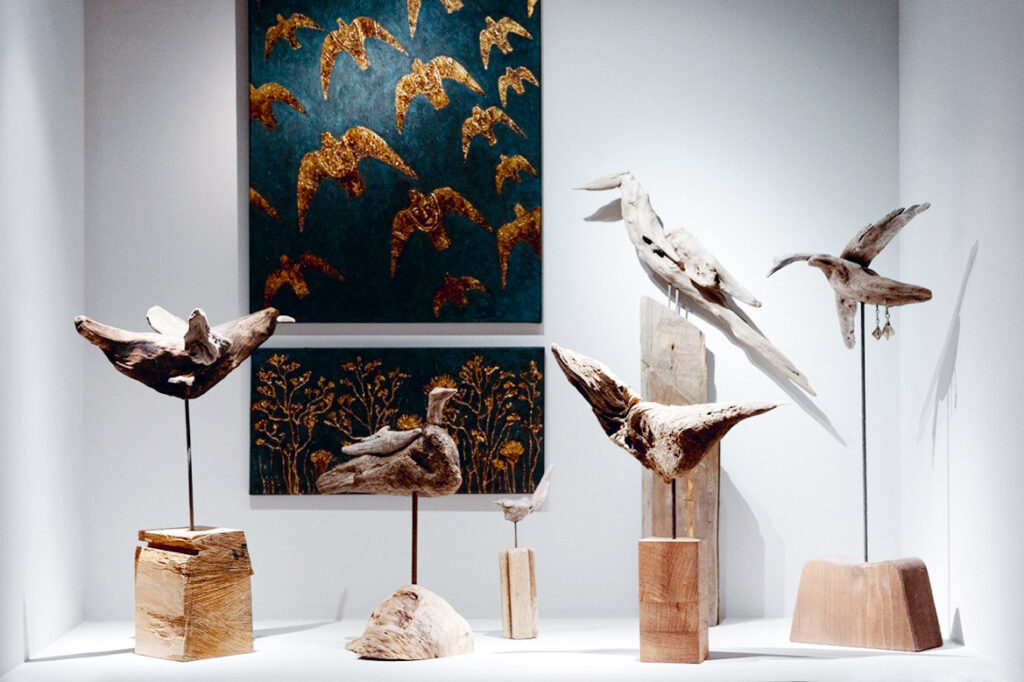
As a result, the exhibition features a large hall embodying life — full of bright colours, festivities, ornaments and decoration. At its centre stands the ‘Time Capsule’, a Russian ark gathering sacred objects: symbols of faith, hope and love. And there is the ‘Night Garden’ — the receptive earth, which serves as a nourishing medium, a promise of renewal and a repository of our culture’s deepest archetypes. When we compare traditional culture with contemporary pop culture, we see how greatly popular culture impoverishes modern life, since it aims solely at entertainment and at the perfect social media image, where everyone is successful, conventionally beautiful and eternally young. We turn to traditional culture because we find in it countless clues for real-life problems, circumstances and challenges. And the more broadly we look at it, the more we can draw from it for our own benefit. That, I believe, is why Russian style is evolving from a delight in colourful forms towards a very deep and fearless study of culture and of ourselves through tradition.
If, in the popular imagination, tradition is merely a kokoshnik, then what might serve as a symbol of such a deep immersion in culture, do you think?
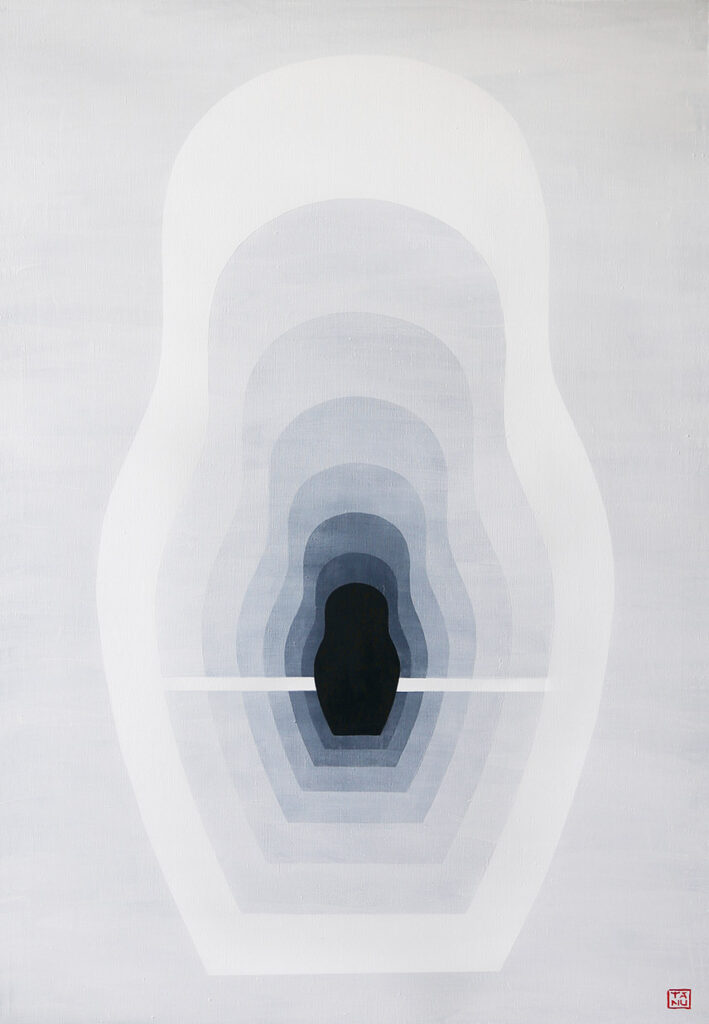
It would be interesting to discuss the abstract archetypes of traditional culture. When speaking of tradition, we often refer to material images, yet it is worth reflecting on categories that cannot be depicted. Take “avos”, for instance. It is a profoundly deep concept, purely Russian and untranslatable into other languages. It is neither passive submission to a prescribed path nor irresponsibility. It is the point where human will meets the will of God. On the one hand, a person places their trust in God; on the other, for God, the manifestation of human will is an essential starting point. A person takes the first step — and then, in complete uncertainty, entrusts themselves to the divine will. This is a unique form of thought, considered to be nationally determined. It would be fascinating to find a visual expression of how modern man experiences this.
Or take another example — over the course of several exhibitions we have been speaking about soulfulness, or dushevnost. We register it in visitors’ reactions and in the atmosphere of the exhibition itself. But what exactly is it? It has nothing to do with how the exhibits are arranged or how the hall smells. The sensation is impossible to put into words — yet somehow it arises. Soulfulness is a category that belongs to Russian folk culture. It encompasses family closeness, the tradition of tea drinking, collectivism in the best sense of the word, and the drawn-out melodies of folk songs. It springs from the sincerity of people who are entirely open with one another, who treat each other “with soul” — there is simply no other way to describe it.
Apart from your own project, where do you currently see the centres of in-depth research into national tradition?
They are springing up across the regions at the moment. There is enormous interest in traditional culture in Tomsk and Omsk. I see fascinating exhibitions there, and they are not merely decorative but driven by a desire to immerse oneself deeply in the material. For our part, we try to support such projects. This spring in Salekhard we opened our first regional exhibition, ‘SVOYASI: THE UNKNOWN’.
Who comes to your exhibitions? Where do you see the greatest interest in traditional culture?
In terms of age groups, our core audience is made up of people between 25 and 50. That is to say, the most active segment of society — those with careers, a broad range of interests and a certain level of intellectual engagement. These are people who keep in touch with their grandmothers or parents, raise children of their own and want to give their lives real depth. Naturally, 85% of them are women, but that is entirely to be expected, since women have always been the principal bearers of tradition and the custodians of ritual. It is equally logical that they should be the first to sense a deficit of meaning and the need for a clear system of values so as not to drown in the flow of information. Tradition provides answers to questions about the cycles of life, raising children, marriage and so forth. Of course, older generations also come out of interest, and since last year’s exhibition we have begun running tours for schoolchildren.
How do you talk to schoolchildren and teenagers about traditions in a way that genuinely interests them?
Everything can be presented through a fairy tale, because it is a universal format. A fairy tale can capture the interest of small children, and adults will find something in it for themselves too. We had a wonderful moment at the exhibition in Salekhard. The display was devoted entirely to the fairy tale and the archetypal journey of the hero. And during the tour I drew many parallels with the life of modern man. Here is a hero, and he must inevitably leave his father’s house — just as all of us, at some point in life, move away from our parents. Then the hero walks through a dark forest — a metaphor for life: there are no beaten tracks in it, no one will tell you in advance what is right, and a person goes forward at their own risk. And where is the hero going? He is going to the Thrice-Ninth Kingdom — when we are young, it seems to all of us that the grass is greener somewhere else, that dreams come true somewhere out there, and that you only need to get hold of the Firebird’s feather for your life to be made. And the hero arrives in this Thrice-Ninth Kingdom and, as a rule, gets what he dreamed of. And he realises that happiness does not lie in that. But he has already travelled such a distance, undergone so many spiritual transformations, that he understands happiness is his own home. And he returns home, and always, at the end of the fairy tale, he takes up the throne in his own kingdom — which in truth means within his own family, where his happiness lies, a happiness that would have been impossible without that difficult journey. And at that moment on the tour, one visitor suddenly exclaimed: “Wait, so life itself is a fairy tale!” And it was such a sincere discovery — not that fairy tales carry a moral, but that life itself is a fairy tale. That corresponds very closely to the outlook of modern man: you are the hero of your own fairy tale, the director of your own happiness. And here we come to the overarching mission of the SVOYASI project — for the exhibition to become an event in the viewer’s personal life. Not simply to introduce them to some era or collection, but to spark a living dialogue with the artists, so that the viewer feels its relevance.
There are 100 artists taking part in the current exhibition at the State Historical Museum. Was the selection process difficult?
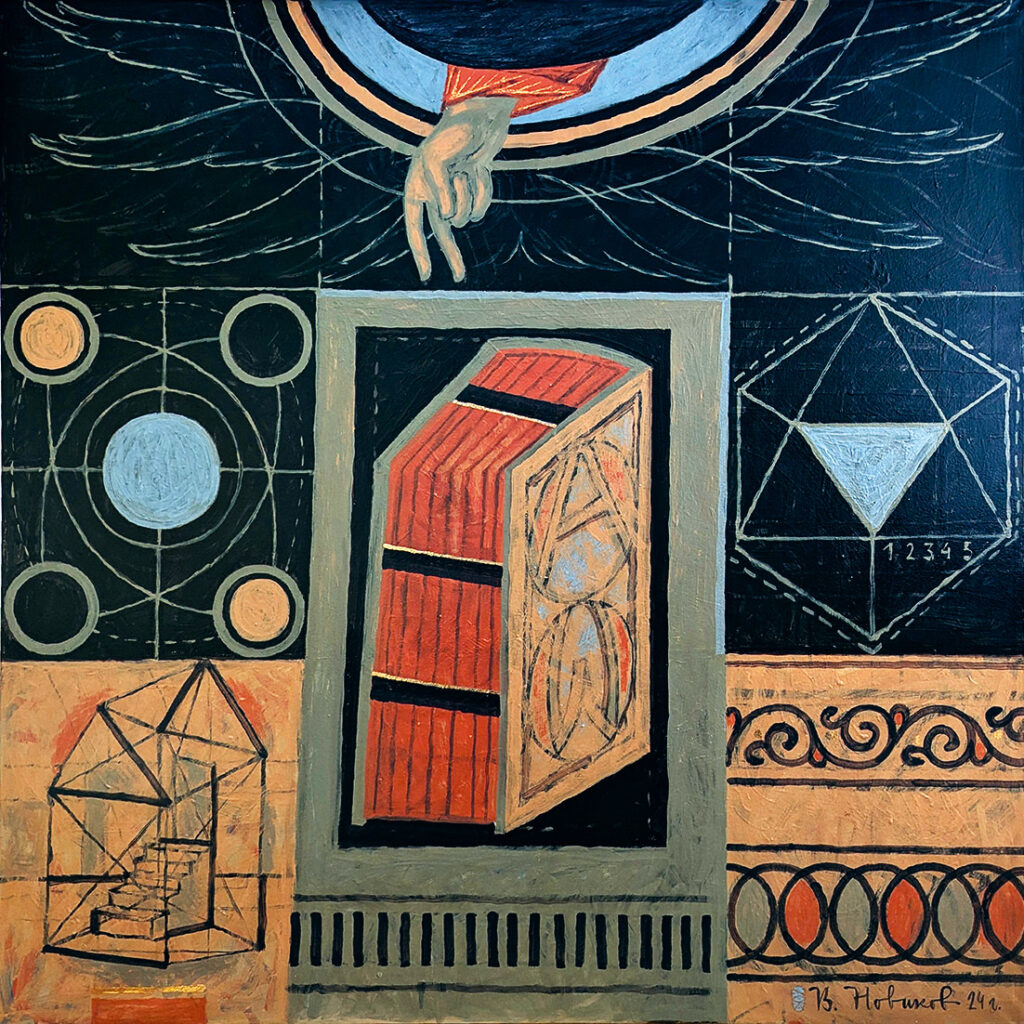
Before each exhibition we hold an open call, and this time we received around 800 applications. Selection always depends not only on the quality of the work, but also on whether it can be woven into the overall context, into a single narrative. Moreover, over four years of regular exhibitions we have developed clear criteria for rigorous selection. For a long time we ran markets — we wanted to support the full breadth of interest in the subject. Craftspeople working within the tradition could take part, making accessories with traditional ornamentation, for example. And they found their audience. But when it comes to contemporary art, which we present in a museum format, we naturally select the most profound statements on the given theme. Sometimes works bear no direct reference to a folk motif and at first glance appear to have nothing to do with tradition at all, yet the artist’s concept is driven by that same Russian sense of “avos” (blind faith that things will somehow work out), by daring or by an all-embracing love for the whole world.
For example?
At the last exhibition, for example, there was Sasha Malysheva’s work “The Breath of Birches”, which addressed the environmental concerns so pressing today. Over two months, the artist recorded fluctuations in CO₂ levels in a birch grove, then processed the data, turning it into a particular rhythm and melody that she combined with the sound of bells. In doing so, she demonstrated that nature breathes and lives as an organism. From recycled plastic she created a dome, shaped like those of Orthodox churches, to protect young saplings. The result was a piece that brought together ecological care, church cupolas, bell-ringing, a love of the birch tree and that Russian universalism whereby we wish to save the whole world and make it happy. It might seem to have little connection with tradition, but in fact it does — the ideal of living in harmony with nature is deeply ingrained in our culture.
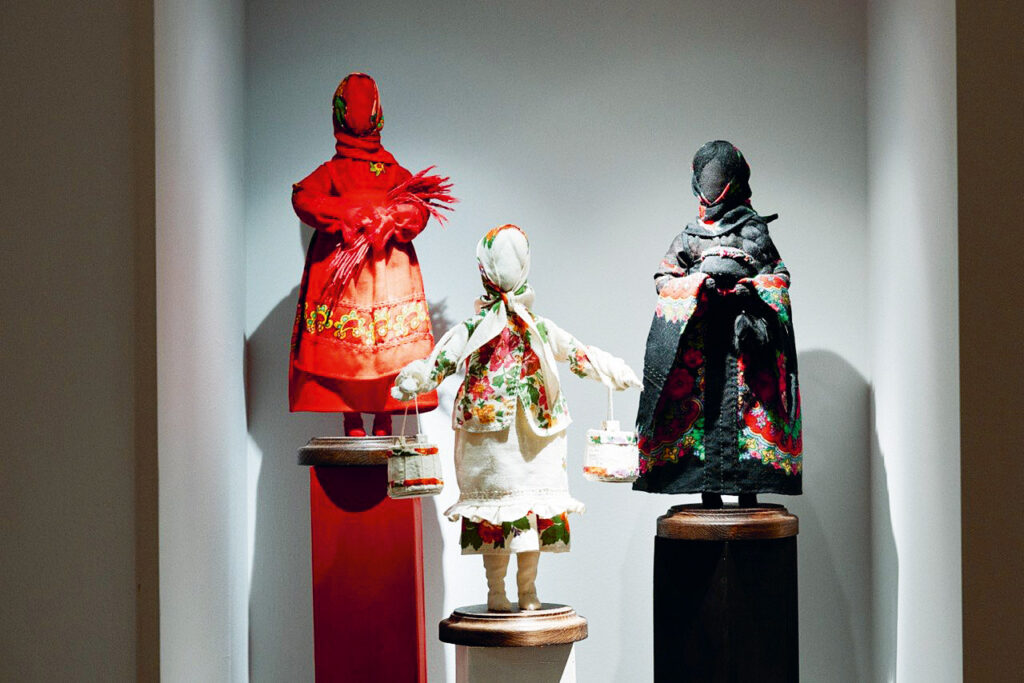
At the beginning of the last century, an encounter with archaic forms gave rise to Western modernism and the Russian avant-garde. Can tradition today be spoken of as a ‘new archaism’ that provides an impulse for development?
We return to traditional culture periodically, because it holds the original meanings and foundations. Each time we stand on the threshold of a new era in art, we need somewhere to draw upon what is authentic, what has been lived through over centuries. The only question is one of our own responsibility: whether we can make a worthy contribution, and whether contemporary art inspired by tradition will truly be the equal of previous eras. In the days of Sergei Diaghilev and his Ballets Russes, interest in the attributes of Russian culture found expression through ballet, theatre and fashion. It seems to me that what distinguishes today’s interest in tradition is its focus on meaning and the desire to fill the gaps left by contemporary pop culture.
Can we speak today of a language of contemporary Russian design, or is it still taking shape — in part thanks to your project?
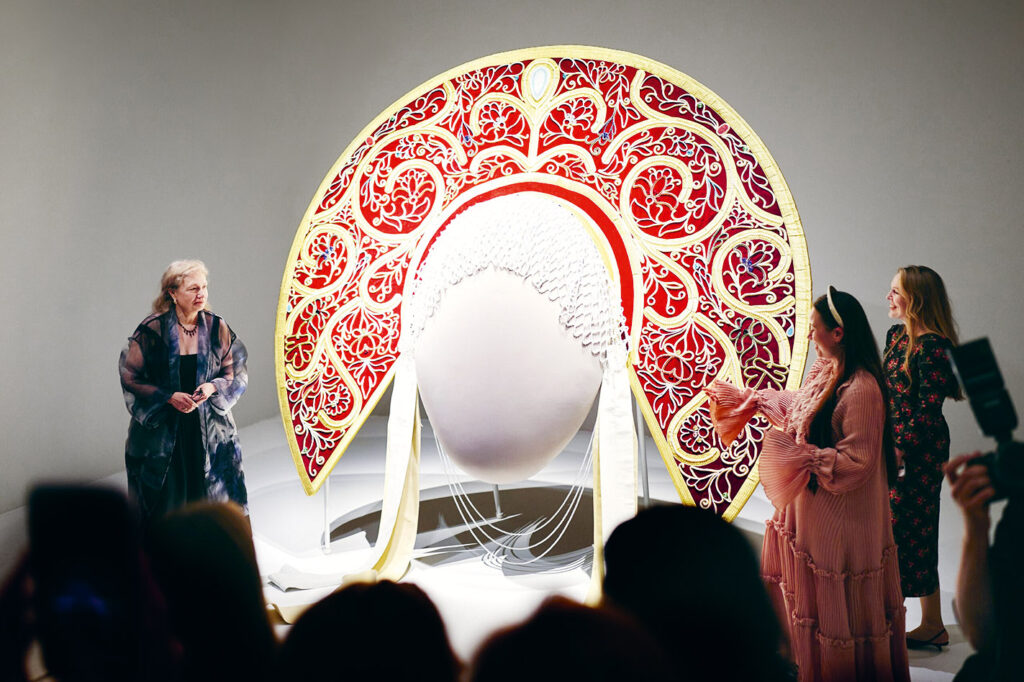
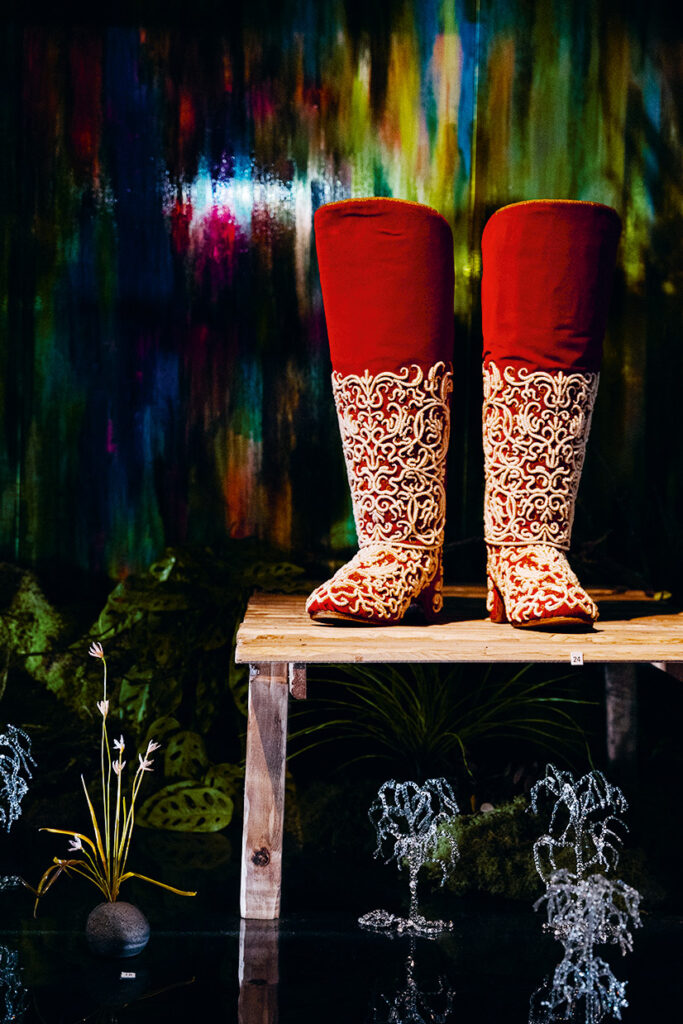
I feel it is gradually taking shape too, and here design runs parallel with art. Objective circumstances have certainly played their part — who could have imagined that, say, Ikea would disappear from our market, opening up such a vast field for Russian designers? Yet, on the other hand, when we speak of design, we are speaking of an important aspect of programming space. If an object in your home constantly enters your field of vision, however fleetingly, you inevitably attune yourself to it. The ideas the maker has invested in it remind you of something important; they enter your thoughts, influence how you feel about yourself and reinforce your cultural identity. Why, for instance, is there such interest in kokoshniks? Because in the past, a woman’s status was considered exceptionally important. It embodied all the values of the culture. That is why even today one should wear it mentally at all times, conscious of the full richness of one’s traditions. When you see magnificent historic kokoshniks in a museum, you understand what sense of inner dignity one must have had wearing such a headdress. And what matters is not how much pearlwork there is or how skilfully the kokoshnik was made, but how the wearer felt in it.
Another of SVOYASI’s aims, therefore, is to shape a way of life — to make tradition part of everyday living. And this sits very well with the fact that contemporary makers are prolific and active, and that many of their pieces are entirely affordable.
How interesting do you think our immersion in and reinterpretation of traditions might be for an international audience? And is it of interest at all?
It seems to me that everywhere today, an interest in traditional culture and one’s own roots is taking the place of globalisation. And it is precisely through a return to one’s cultural identity that intercultural dialogue is strengthened — we become far more interested in talking to one another. “Souvenir” symbols — the Eiffel Tower, a bear with a balalaika or a sombrero — tell us essentially nothing about a culture; they are simply not enough. But when someone loves and knows their own culture and understands its value, they will always be attentive to the manifestations of another. That is how a respectful dialogue is built.