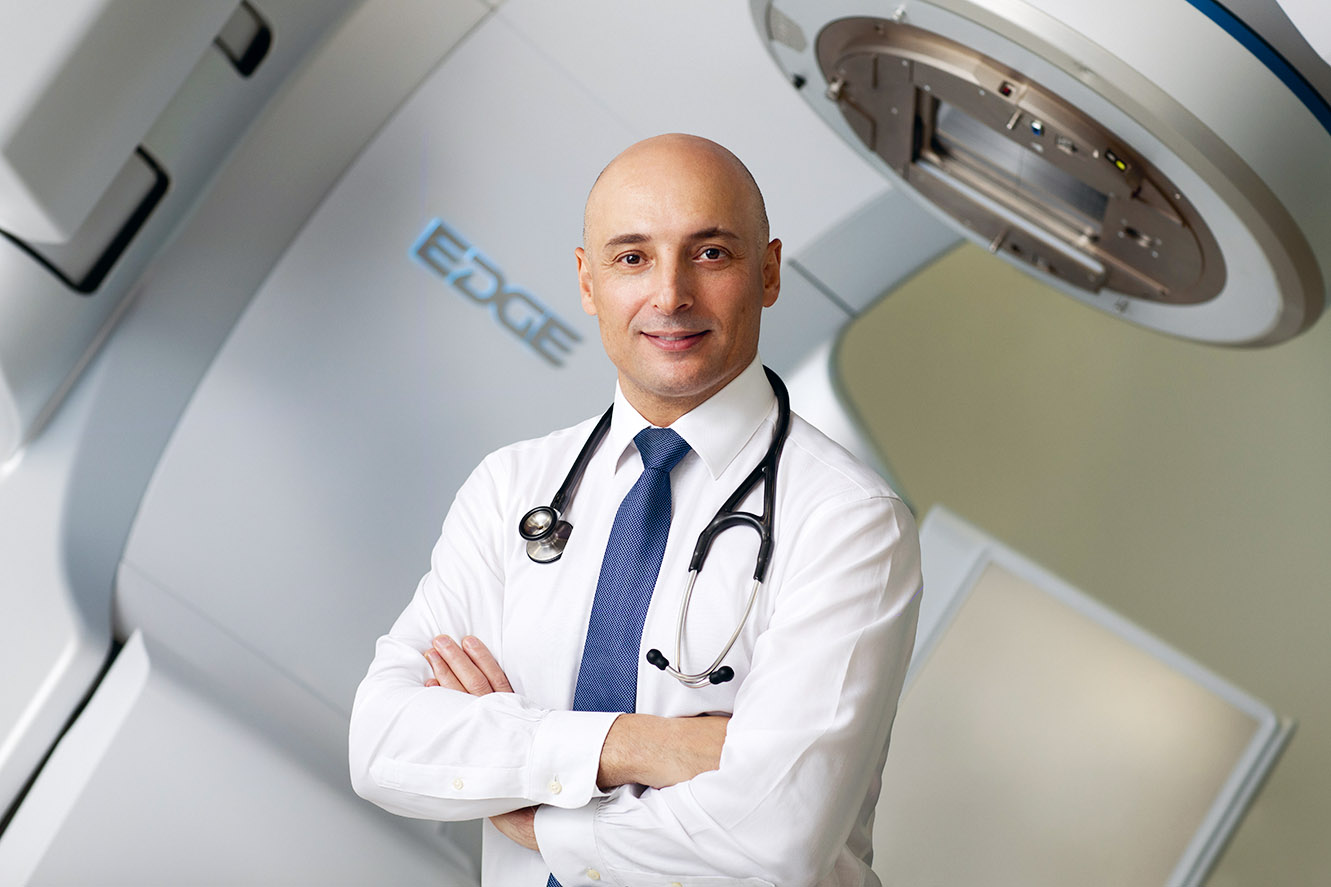
Mikhail Piotrovsky, Director General of Russia’s foremost museum, the State Hermitage, is also known worldwide as an Arabist scholar and researcher of the East.
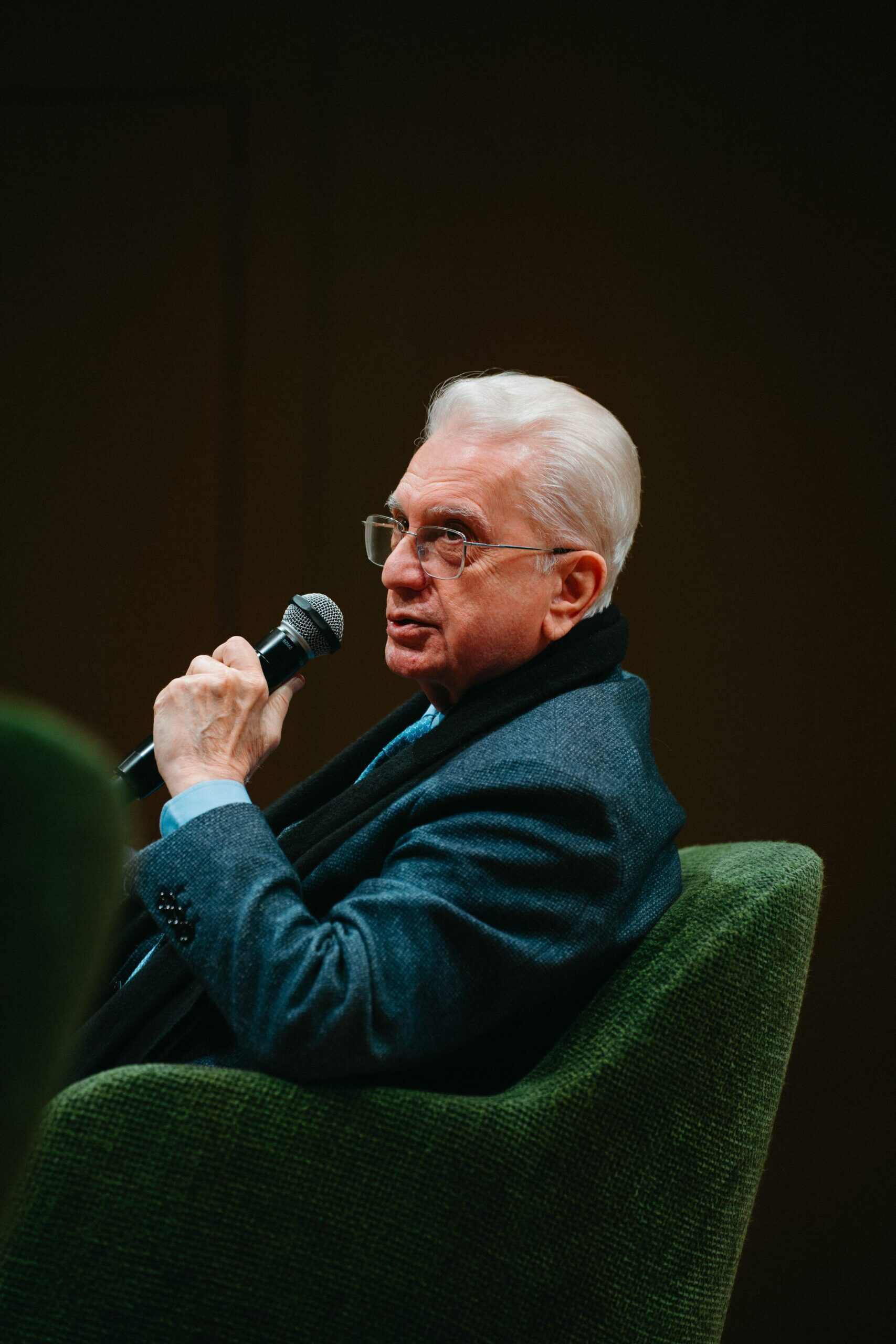
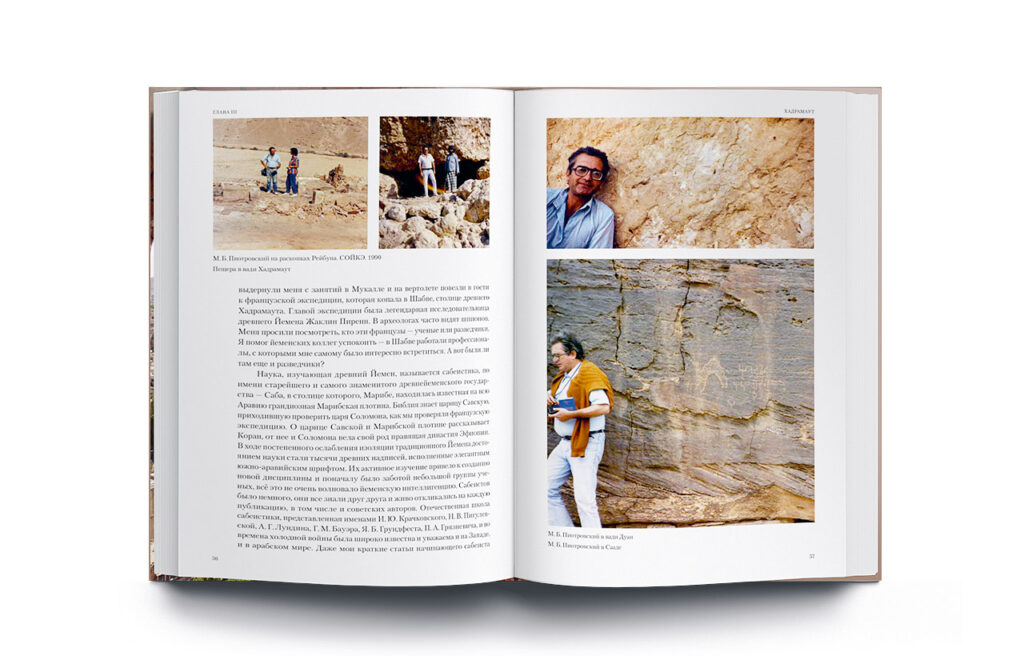
Before joining the Hermitage in 1991 and subsequently becoming its director, Piotrovsky led the Russian archaeological expedition to Yemen in 1989–1990. He is the author of more than 500 scholarly works devoted to Arab culture, the history of Islam and the archaeology of Arabia. It is precisely this journey as an Orientalist through pivotal places and eras that the head of the Hermitage recounts in his new book, I Am an Arabist, published by SLOVO/SLOVO — a narrative poised at the intersection of memoir, history and cultural studies.
The new book was presented in March this year at Noôdome, a community and club space. Both Mikhail Piotrovsky and Natalia Avetisyan, one of the founders of SLOVO, who hosted the evening with the head of the Hermitage, are close friends of Noôdome. WATCH Russia magazine likewise enjoys partnerships with both the community and the country’s principal museum. It would therefore have been quite impossible for us to publish our Arabic issue without Mikhail Piotrovsky’s “Eastern confession” at Noôdome. Below is a brief extract from that talk.
My new book is in many ways impudent, because it argues that a museum director ought to be a scholar. One of its chapters is entitled “The Double Helix” — DNA, the graphic model of our lives. I describe how the life of a scholar, a researcher and an Arabist becomes intertwined with service to the Hermitage; how a museum develops when it has been led for many years by Orientalists; and why this makes the process more complex and more interesting.
Honestly, the titles of my books are all cheeky to one degree or another. Only a few years after I became director of the greatest museum in the world, I wrote a book and called it My Hermitage. Many people said: “You’ve got a nerve!” Another book, which we made together with Geraldine Norman (journalist, writer, friend and adviser to Mikhail Piotrovsky. — Ed. note, WR), also had an unconventional title — Culture as Scandal. So every book throws down its own challenge, and that is our answer to the challenges thrown at us. That’s life, there’s no getting away from it — you have to respond to challenges.

To find Oriental studies interesting, one must be a romantic. I travelled to the Pamirs with my friend Vanya Steblin-Kamensky, a brilliant authority on the Pamir languages (a linguist, academician of the Russian Academy of Sciences and specialist in Iranian studies and the history of the Iranian languages. — Ed. note, WR). Nobody obliged me to go, as the Pamirs were not part of my research plans. But it is always good to find oneself in the Pamirs: either simply to look around, or to begin searching for Ismaili manuscripts and inscriptions. We arrived in Panjakent — everyone was excavating Sogdian frescoes. Yet Arab coins interested me a thousand times more. I said: you are wrong not to give them their due attention, they are extraordinarily interesting; this period is precisely the one connected with the destruction of Sogdian culture. And then, in my own trench, they found a potsherd bearing a humorous Arabic inscription. Everything around was Sogdian, and here I had a sherd with an Arabic inscription! Immediately everyone asked: had I written it myself? What could be more romantic! When you search for romance, it appears, and you must look for it everywhere, because life is certainly an interesting thing, but one must make it even more so.
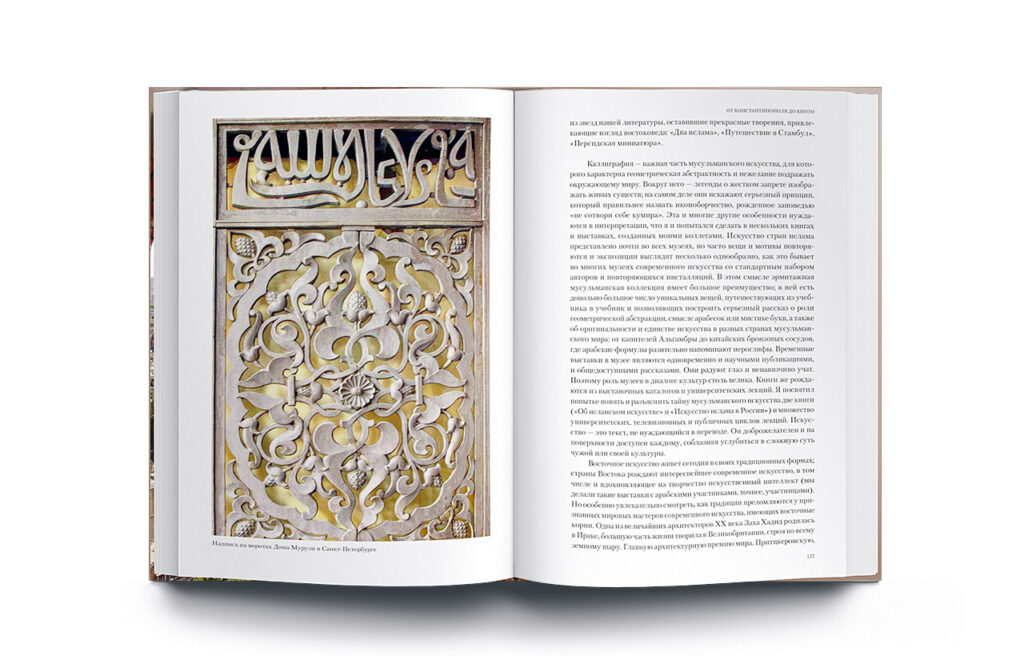
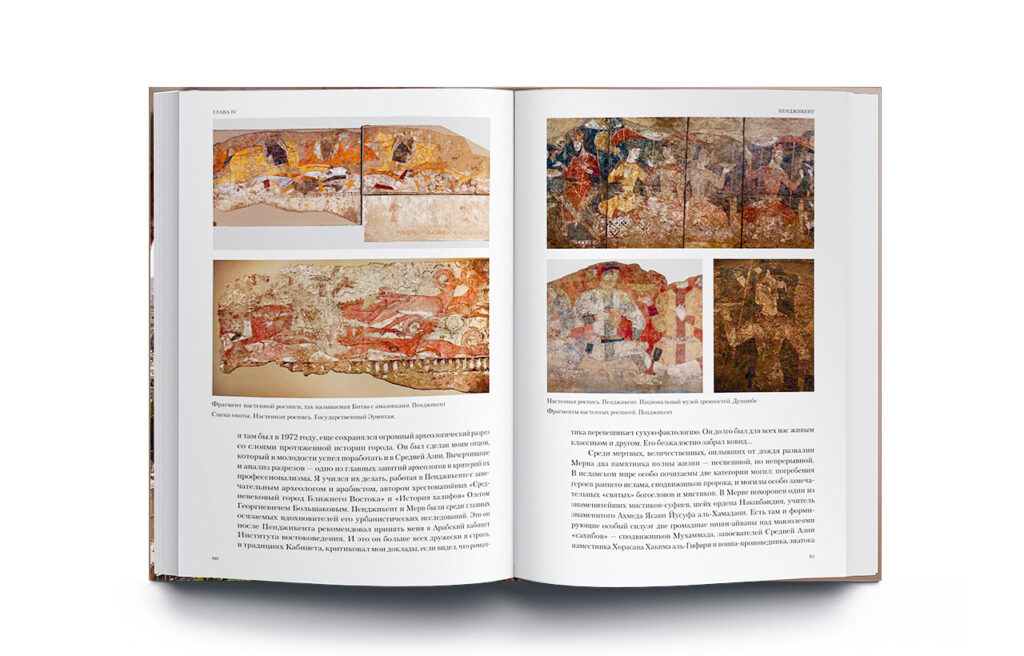

A great museum is the second strand of the double helix that is my life. Being part of it is an inherited fate. I have always been close to the Hermitage, and in the end everything came together in a single turn of the helix.
My father, Boris Piotrovsky (director of the State Hermitage Museum from 1964 to 1990. — Ed. note, WR), excavated a Urartian fortress; the discovery of Urartu was his achievement. My mother, an archaeologist and specialist in medieval Armenian culture, also dug at those same sites. And, incidentally, two or three days before the war began (the Great Patriotic War of 1941–1945. — Ed. note, WR), she unearthed — I mention this in my book — a statuette of Teisheba, the Urartian god of war. So there are several versions suggesting that the war was foretold, or even orchestrated, by scholars: one is the opening of Timur’s tomb in Samarkand, the other is my mother’s discovery of the god Teisheba. Well, we are to blame — what can you do!..
As for my father, as soon as the war began he returned to Leningrad and trained as a saboteur, but then the blockade started, and he defended the Hermitage from air raids, serving as deputy head of air defence. There are several books that tell the story of the Hermitage during the war. It is very important to remember how the country’s principal museum was saved.
I think that all of us, and Orientalists in particular, want Russia to become a force for good in the world. In the Middle East it has always behaved as such. Compared with other countries, our record in that part of the world is impeccable. One would like Russia to continue doing so. How far that will prove possible I do not know; it is difficult to prophesy here. For now, the international community merely shouts from time to time, but does nothing to save the monuments of the East. When the fighting in Syria had only just begun, we were actively arguing that a military solution was needed to protect the monuments of Palmyra. Then Russia entered Syria and liberated Palmyra. A concert was organised there, at which Valery Gergiev performed with his orchestra. Moreover, it was a concert in memory of the Syrian archaeologist Khaled al-Asaad, killed simply for being the custodian of the museum and the ancient city. The situation was such that those whose job it is should have come and discussed how to protect monuments that are not merely at risk but are being deliberately destroyed. Not everyone came. A German archaeologist who specialises in Palmyra — he is also the director of a major museum in Berlin — very much wanted to be there. But he was told: you are going nowhere. It was all Russian propaganda, they said. Yes, to some extent it was Russian propaganda, but at the same time it was an example of how one ought to intervene by force in order to protect cultural monuments. And that, broadly speaking, is no worse than a doctrine that permits intervention to overthrow governments.
The story with Palmyra, however, continued. We decided to restore the triumphal arch and prepared a project. Then something shifted, and UNESCO, which had initially been opposed, approved it. Now our Palmyra project has given rise to another, larger one — a complete geo-electronic survey of all monuments, just as we did for Palmyra. There, every stone was recorded; each one can be rotated and examined in the finest detail. We are currently carrying out this major project for several Asian countries.

Another of the most important things is the protection and documentation of the Christian monuments of the East. Because no one looks after them. And this is something of a mystical matter, for if there are no Christian monuments and no Christians left in the Middle East, the roots of Christianity will be severed — because that is where they lie.
Whatever the global political agenda may be, our tradition in the study of Palmyra — both the older and the more recent — is universally acknowledged. The Soviet Yemeni Expedition (which took place in the 1980s and 1990s. — Ed. note, WR) began work in a territory that almost no one had studied, at a time when scholarly interest was only just turning in that direction. Today, the Institute of Oriental Studies is marking the 30th anniversary of its Socotri research. Socotra is an island of astonishing beauty to the south of Yemen, where an ancient relict language has survived, one of the 15 languages of South Arabia. The Moscow Arabist Vitaly Naumkin travelled to Socotra, learnt the Socotri language and wrote a remarkable book, The Island Where the Phoenix Is Born. What is more, he brought together an entire team of linguists who created an alphabet for this previously unwritten language and published a large corpus of texts. So in this region we have a 95% competitive advantage.
“A museum is not a warehouse, a museum is a story.” I love repeating that. An object simply lying in a museum is just an object. For it to become an exhibit, you have to tell its story. That is why permanent displays are created. We held a very substantial museum conference on what constitutes effective museum work and how to measure a museum’s success. When people speak of a museum as a “sector” or an “industry”, they are using the language of another sphere, not ours. Of course, money matters and sponsors are essential, but scholarly work develops slowly and gradually.
Museums are not outside politics, but they stand, as it were, above it. A museum must make its collections accessible, and we are creating our satellites — Hermitage satellites — beyond St Petersburg. We are a little self-assured, and it makes no difference to us whether they are in Paris or Vladivostok, because when Paris closes, there is Vladivostok, and Paris can wait for now. I say: you cannot take beautiful paintings from me. You can take the Hermitage. The Hermitage will come to you, and those paintings are part of it. When you make your collection accessible, you gain space to tell your own story.
Some people like the Hermitage’s satellite museums, others do not. Even certain seemingly cultured individuals have written: why display our heritage to those hostile Europeans, and put it at risk besides? Yet when we staged, for example, an exhibition on the Russian Revolution and the Tsar’s family, people came and wept. It was a story about our tragedy, about the Tsesarevich, about the Imperial Family… That is precisely what soft power means — speaking openly about how we see ourselves.