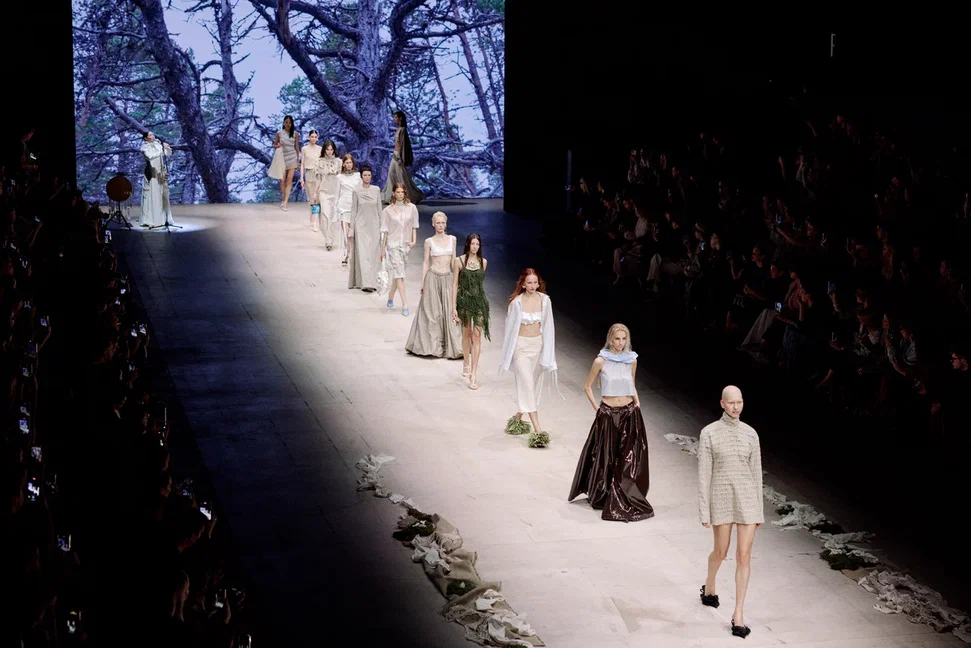
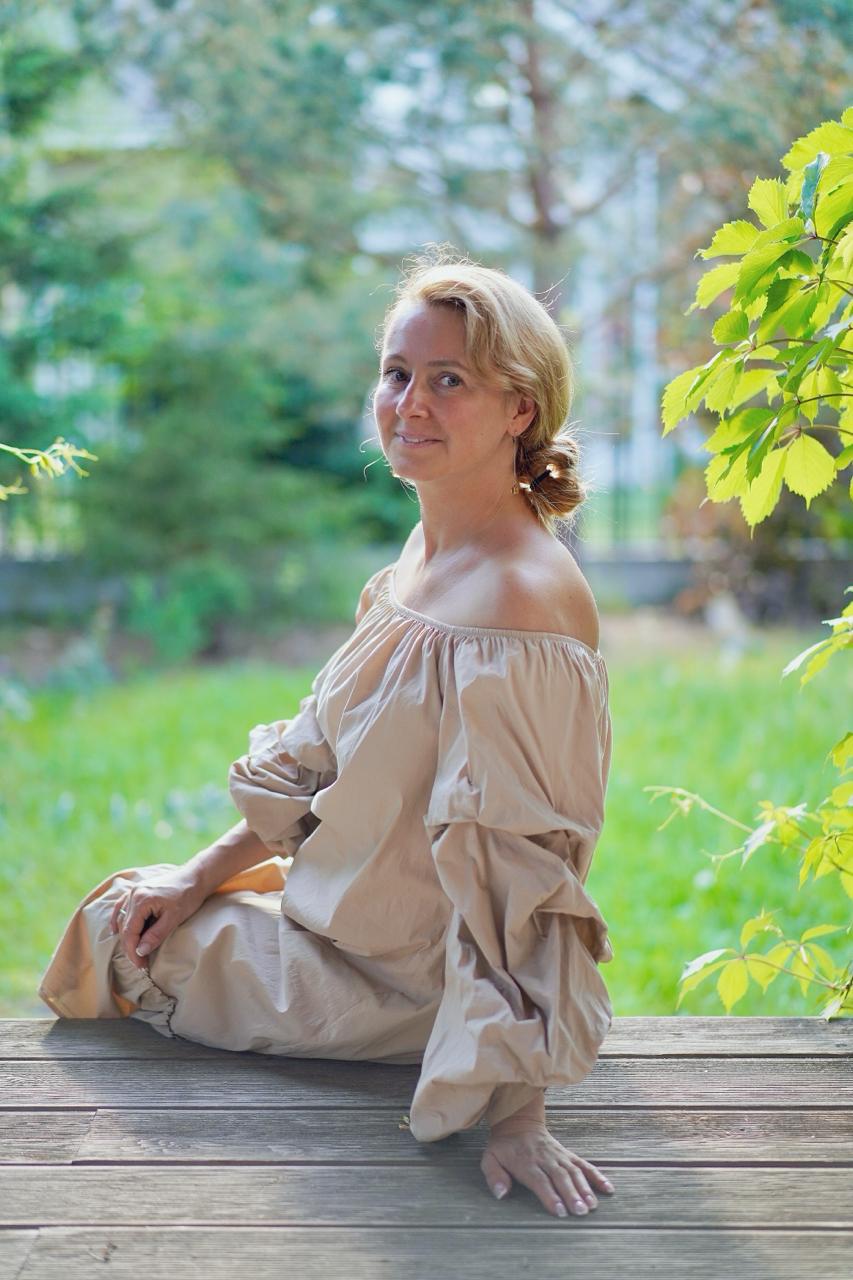
Valery Voronin, Principal Conductor and Artistic Director of the Astrakhan Opera and Ballet Theatre and Honoured Artist of Russia, discusses the Russian Operas in the Astrakhan Kremlin festival and how it is transforming the image of the city and the entire Caspian region.

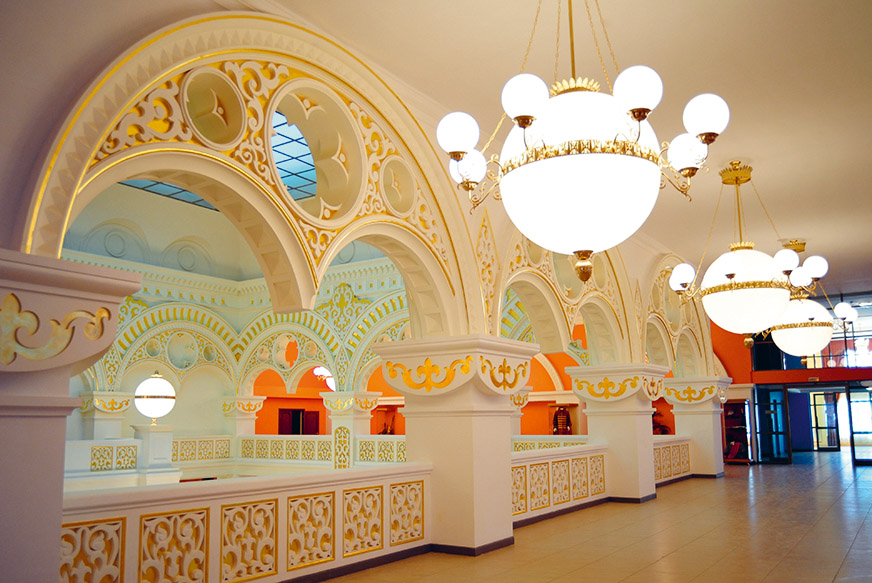
The Astrakhan State Opera and Ballet Theatre is a grand theatre in every sense of the word: its stage is one of the largest opera platforms in Europe. It acquired its imposing Pseudo-Russian building in 2012, at which point its concept and repertoire were entirely overhauled. Artistic director, general manager and principal conductor Valery Voronin placed his bet on a serious classical repertoire. Today the theatre is Russia’s southernmost operatic outpost, staging around 350 events a year, more than half of them operas, ballets and symphonic concerts. To bring opera to a wider audience, Voronin also conceived the Russian Operas in the Astrakhan Kremlin festival in 2012. We spoke to him for Watch Russia about his dream of turning it into an event as significant as the Bayreuth Festival — the oldest in the world, founded by Wagner himself — as well as the particularities of performing opera in the open air and the theatre as a “genius loci”.
How did the idea of staging operas and concerts in the Astrakhan Kremlin come about?
When I was first invited to Astrakhan to see the final stages of construction of the new opera and ballet theatre, I was shown all the local sights. Among them was the unique Astrakhan Kremlin with its majestic architectural ensemble. The moment I saw it, I immediately thought that this was where open-air operas ought to be staged. Ahead of the theatre’s opening, it was important to draw the attention of residents and visitors alike to the classical music repertoire, and the Kremlin was the ideal setting for it. People who might never otherwise attend can come to open-air projects out of sheer curiosity. As practice has shown, the idea of popularising opera was both timely and sound. Young people who had never set foot in a musical theatre came to our open-air performances and then shared their impressions on social media: opera productions, it turned out, were not at all tedious but genuinely interesting, and could be presented to a newcomer to musical theatre in a thoroughly engaging and contemporary way.

The kremlin space is used to stage monumental works: Prokofiev’s opera War and Peace and his cantata Alexander Nevsky, Mussorgsky’s Khovanshchina. Could something on a smaller scale be staged there — Tchaikovsky’s Eugene Onegin or The Queen of Spades?
We try to keep the programme varied. Alongside Boris Godunov at the first festival, Khovanshchina and last year’s War and Peace, which became our most monumental production, we have presented Dargomyzhsky’s Rusalka and Rimsky-Korsakov’s liturgical opera The Legend of the Invisible City of Kitezh and the Maiden Fevroniya. Previously, our stage faced the Kremlin cathedral and Lobnoye Mesto. That architectural ensemble called for a corresponding style of production: the operas were given in strict classical interpretations. Admittedly, in 2019 there was an experiment: director Georgy Isaakyan staged Ruslan and Lyudmila in an entirely contemporary idiom. Now we have moved the venue away from the cathedral. And perhaps it is already possible to stage both The Queen of Spades and Eugene Onegin. Yet there are a great many Russian operas that, sadly, are rarely performed and almost never appear on playbills. For instance, of Rimsky-Korsakov’s operas, companies mainly perform The Tsar’s Bride, but this composer wrote 15 operas! In 2026 we plan to step away from monumentality and present his The Tale of Tsar Saltan.
Are you planning to stage operas by foreign composers in the Astrakhan Kremlin?
It was my firm decision to present only Russian operas here. It is no accident that our project is called “Russian Operas in the Astrakhan Kremlin”; it is supported by the Presidential Fund for Cultural Initiatives and by Igor Babushkin, Governor of the Astrakhan Region. We have placed the emphasis on Russian music because it is closely bound up with the culture of the Caspian region and helps it to develop.
The Astrakhan Kremlin holds 2,500 spectators. How do you achieve good acoustics at an open-air event?
Through trial and error we found the optimal working conditions, and now we know precisely how to achieve high-quality sound. Naturally, we encountered various difficulties. For example, at the first festival, the radio communications of the ambulance and emergency services on duty in the kremlin could cut into the frequencies for our microphones. Can you imagine? We had to clear those frequencies.
Now each of our productions uses roughly 120 microphones and two enormous multi-channel consoles. We have had an excellent sound engineer working with us for ten years. We experiment with the placement and rigging of the microphones, and we know how to deal with the wind — Astrakhan can be very windy. There is one further difficulty: at many opera festivals the open-air venue is surrounded by a stage house, which allows performances to go ahead in the rain. Our stage, however, is completely open, so as to create the sensation that the architectural ensemble and the operatic action merge into one.

And what do you do when it rains?
There is little rain in the Caspian region in August, so the weather is on our side. Over the years of the festivals it has let us down only twice: rain began just before the start of Boris Godunov — the first opera staged in the Astrakhan Kremlin — and we had to wait for it to ease off. And in 2014, hailstones came down on us during the finale of Prince Igor. The performance had to be halted, and the apotheosis marking Prince Igor’s return was cut short by about three minutes.
The Astrakhan Opera and Ballet Theatre, which opened in 2012, was essentially built from scratch under your direction: you assembled the opera and ballet companies, along with the artistic and administrative staff. The people of Astrakhan, accustomed to seeing operettas on the playbills of the old theatre, were actively asking themselves at the time whether the city really needed a 1,200-seat opera house at all. Now they are discussing entirely different matters — premieres and the standard of playing by the orchestra and soloists. Was it difficult to change attitudes towards the theatre?
It wasn’t easy. During the final stages of construction we had plenty of opponents who couldn’t understand why Astrakhan needed an opera house. Who would go there? Then rumours began to circulate that the building had been poorly constructed. And in those early years, some of the audience came simply to look at the exterior, the interiors and the stage, rather than for the productions themselves. The opera festival in the Kremlin helped to change that perception and quieten the criticism directed at the theatre. Within three or four years we noticed a shift in attitude towards us. Today audiences come to the theatre specifically for a performance or a concert, and they behave accordingly.

Did the theatre ever have to adapt to local tastes? Or did you help audiences gradually grow accustomed to a serious classical repertoire?
In the first five to seven years of our work, the question often arose: perhaps we should stage an operetta after all? Something lighter, more entertaining? But the path I chose — a strict approach to opera and ballet — ultimately proved to be the right one. I never tried to ingratiate myself with anyone or to be led by those who wanted something simpler. It seems to me that the Astrakhan Opera and Ballet Theatre, which is one of the largest in Russia by floor area, and indeed any theatre, is an educational institution. And we sought to raise our audiences up to the art, rather than lower ourselves or follow the lead of those who wished things were otherwise.
How does your theatre act as a ‘genius loci’, shaping the identity of the region and the city?
Astrakhan was originally a merchants’ town, known across Russia for its watermelons, black caviar and dried vobla. I have always wanted to change that. And perhaps, through our festival and a theatre where opera and ballet are performed to world-class standards, we have gradually shaped the image of Astrakhan as the cultural capital of southern Russia, rather than merely its principal fishing town. Today, many people travel from other regions to see our productions. We are trying to break down the stereotype that theatre is something dull and forbidding, and to turn it into a place people are drawn to. We hold a jazz festival and a non-classical music festival in the park called “Music on the Grass”, giving local musicians a chance to present their work, and we organise lectures and masterclasses for young people. All of this creates a distinctive, creative atmosphere. We also run a project called “Holidays at the Theatre”: children are brought to us early in the morning and collected at the end of the working day; they are fed at the theatre, taken on tours, played active games with and introduced to the history of the performing arts. Most importantly, they study theatrical disciplines: singing, choreography, stage speech, acting and stage movement.

It is common knowledge that an appreciation of opera and classical music must be cultivated from childhood. But how does one introduce a young audience to them?
Today that task has become several times more difficult. When we were at music school, there were neither gadgets nor the internet, and our perception of music was entirely different. Now devices accustom children to short, fragmentary viewing and foster a clip-like way of thinking. All of this complicates the mission, so to speak, of drawing children into the theatre. We have educational programmes for every age group, starting from the age of 3. Our children’s ballet and choral studios are up and running. When we first opened these studios, I was somewhat apprehensive: it was unclear what would happen if a large number of small children came to study at the theatre all at once, but I was delighted to see that they began bringing their friends along. Members of the choral and ballet studios perform in our productions, and parents who initially visited the theatre with only one aim — to watch their child — now come to see an opera or a ballet. The forthcoming premiere of Sergei Prokofiev’s ballet Cinderella is precisely the sort of production for a family outing. The process is moving in a positive direction, but it is a rather difficult path.

What challenges are you currently facing in your work?
I shall hardly be breaking new ground by saying that the most pressing problem is one of personnel. You can expand the repertoire and increase the number of performances, but you will always need people. And when it comes to the theatre, these are not simply diploma-holding specialists, but individuals prepared to devote themselves to the academic arts.
In December 2025, the theatre performed on the stage of the Dubai Opera. How did your tour of the United Arab Emirates go? How much does the audience there differ from the Russian one?
This was our second visit to the Dubai Opera. The first time we brought Puccini’s Tosca, and in December we presented the ballet The Nutcracker. The tour was a great success: every ticket for our performances was sold. The Dubai Opera is an excellent, highly professional theatre with very good acoustics, modern technical equipment and a professional team. As for the audience, in Russia it is more discerning, selective and well-versed in the repertoire. There, however, people are remarkably open and welcoming, and our productions were received far more warmly and emotionally. We hope that our collaboration with the Dubai Opera will continue.

We all know what the American dream is: a man from the provinces achieves great success and becomes famous. But does a Russian dream exist?
To my mind, the American dream is like a clear set of instructions on how to achieve happiness and success. It is rational and easy to grasp. The Russian dream, as I see it, is something irrational, in a sense metaphysical: for instance, the belief that a miracle might occur and save us all. We are more open people, fond of freedom — as the saying goes, we love our wild liberty — and so the American dream simply does not work for us. In life, as in art, there is always something just slightly missing.

Would you say you are satisfied with the position Astrakhan Opera has secured on the Russian musical scene during your years of work? And what are your plans for the next 15 years?
A true musician — and I would like to consider myself one — is never satisfied with the work he has done. There is always something left to put right. On the one hand, I realise that in a short space of time (our theatre is only 15 years old, whereas there are theatres in the world that are more than 200) we have built up a substantial repertoire — 60 titles on the main stage — and assembled a full company capable of competing with Russia’s leading theatres. Add to that the enormous number of festivals, concerts and concert programmes, lectures and masterclasses we have staged. We have moved beyond criticism of the theatre and made it a place of attraction for patrons, residents and visitors alike. People now come to Astrakhan not only to fish, but also for our premieres. Yet we cannot rest on what has been achieved. My dream is that more companies will come to our festival in the Astrakhan Kremlin, that it will last a month or six weeks and become no less significant than the Bayreuth Festival. That is the first thing. The second, and more far-reaching, is that I would like audiences to feel a genuine need and desire to come to the theatre, to listen to opera and classical music.